Digital transformation has been on the leadership agenda for years, but generative AI has raised the stakes dramatically.
IMD Professor Mike Wade argues that the biggest challenge facing organisations is not adopting AI, but leading the cultural and organisational change that comes with it. In this interview he explains why so many transformation initiatives fail, how leaders can use AI to improve their own decision-making, and why organisations must focus on value creation rather than technology for technology’s sake. He also explores the ethical challenges surrounding AI and why resilience may prove just as important as agility in an increasingly volatile world.
Mike is Professor of Strategy and Digital at IMD and Director of the Global Center for Digital and AI Transformation. He is also the author of Digital Vortex, Hacking Digital, Alien Thinking, Gain: Demystifying GenAI for office and home, and Twin Transformation.
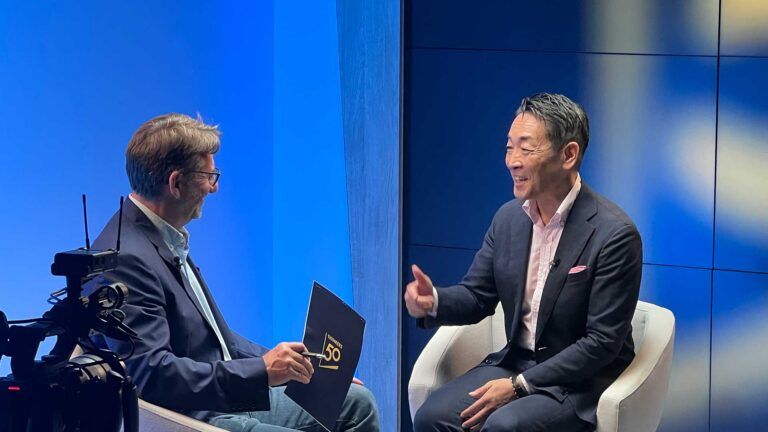
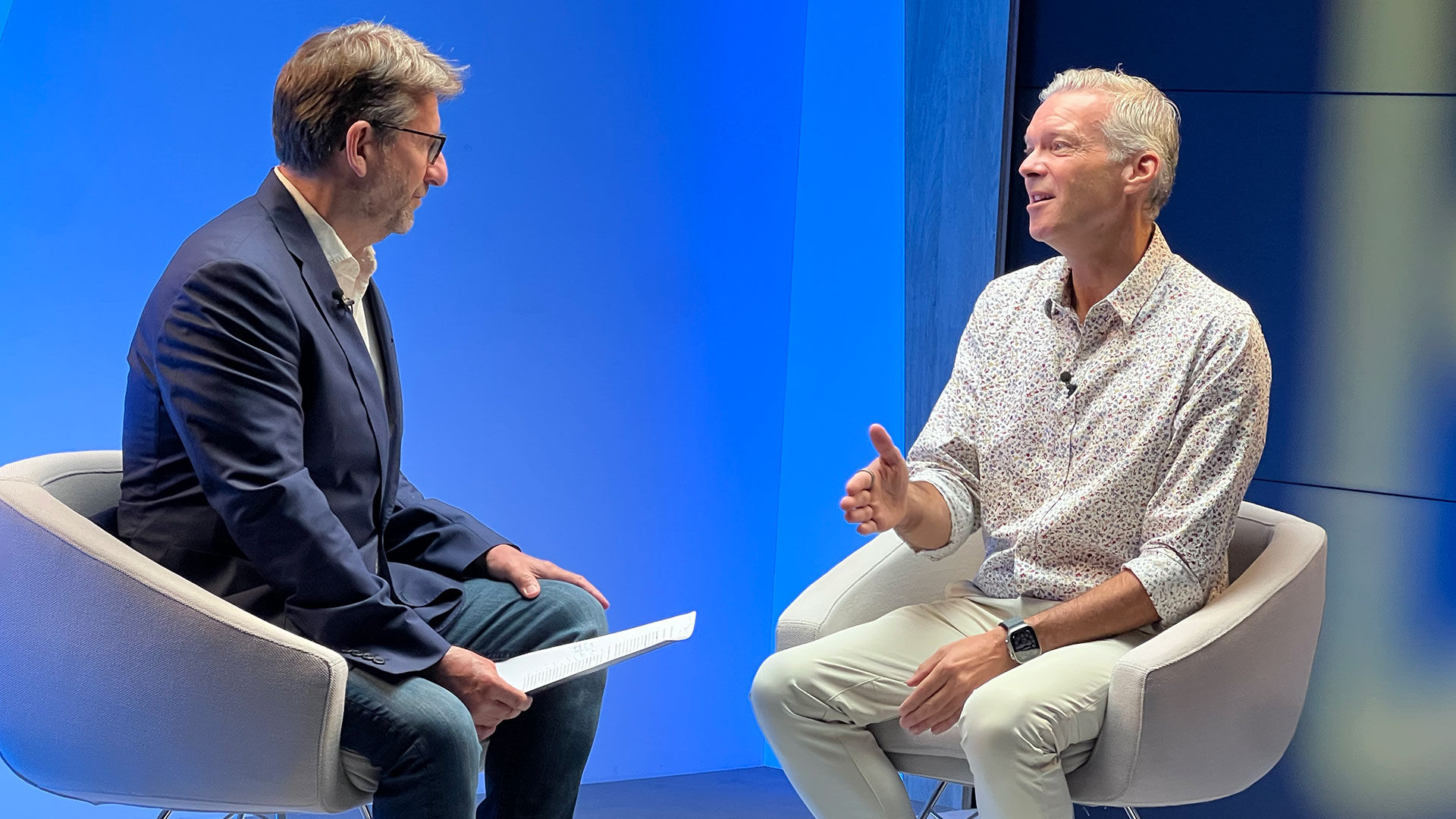
Watch the full interview or read the transcript below.
This interview took place at IMD’s signature Orchestrating Winning Performance program in Lausanne, 2026.
Transcript
Des Dearlove:
Hello, I’m Des Dearlove, co-founder of Thinkers50. My guest today is Mike Wade. Mike is professor of strategy and digital at IMD and director of the Global Center for Digital and AI Transformation. A leading thinker on digital disruption and transformation, his books include Digital Vortex, an award-winning bestseller on disruptive competition, Hacking Digital, a practical guide to accelerating business transformation, and Alien Thinking on turning breakthrough ideas into reality. In 2025, Mike published Gain: Demystifying GenAI for office and home, exploring generative AI’s impact on personal and professional life. And in the same year, Twin Transformation, examining how AI and sustainability can be combined to create long-term competitive advantage. Mike, welcome.
Mike Wade:
Thank you. It’s a pleasure to be here, Des.
Des Dearlove:
You’ve been writing about digital disruption and transformation for many years.
Mike Wade:
Yes.
Des Dearlove:
What has changed most in the way leaders understand disruption and what have they still not really got to grips with?
Mike Wade:
I think when we wrote Digital Vortex 10 years ago now, disruption was still something that most executives thought happened to other people. And so they were still coming to terms with the idea of disruption, so we unpacked it in that book. I think today that’s no longer the case. I think disruption has become very much a factor of everyday life for executives so they’re more used to it. What hasn’t changed, I think, as we’re focused very much on the digital side and now AI, of course, is that still today, most executives and most organisations treat this as a technology challenge rather than what it really is, which is a change management challenge and often a cultural transformation as well.
Des Dearlove:
So I think you’ve said 87% of digital transformations actually fail, so why are the statistics so scary and so bad?
Mike Wade:
Yeah, we keep track of those statistics as many organisations do. We’ve given up trying to focus on a precise number, but it’s over 80% and it’s really hard. These transformations are really tough. The technology part is difficult, but even if you get the technology part right, you can still fail. Part of the issue is with expectations being unrealistically high. Part of it is that the organisational change doesn’t go as well as organisations like. Part of it is because in the rush to adopt the latest technology like AI today, organisations end up with a really fragmented mess of different things going on rather than what they should be doing, which is prioritising based on value creation.
Des Dearlove:
Now, I’ve been sort of analysing this sort of research for a long time. I mean, 80% of change management… We used to hear 80% of change management transformations didn’t work or failed. The number doesn’t seem… If anything, it’s getting worse, you’re putting it into the high 80s. Does the digital thing make it more precarious or is it… I mean, why aren’t we moving the needle on this?
Mike Wade:
Why are we not learning from past failures? And it is surprising to me constantly that organisations don’t learn. They do make the mistakes over and over again. I think what technology does is it accelerates the process. So the change, maybe you had a little bit more time in the past to adapt to a changing world and do what you need to do. That’s been very much compressed. And I think the stakes are higher because the opportunities are larger, but the threats are also larger, so the whole game is getting harder to play. And even if organisations are getting better at playing the game, because it’s getting harder to play, the success rate doesn’t necessarily improve.
Des Dearlove:
Obviously, everyone’s talking about AI and gen AI and what do leaders need to understand about it beyond the kind of the hype? What is it that they really need to get their heads around?
Mike Wade:
I think they need to get their heads around the fact that unlike other waves of technology disruption, this one is a multipurpose disruptor. It’s a general purpose. It has the ability to disrupt by itself, but also to disrupt many other areas, unlike let’s say blockchain, which can be disruptive within very specific niche areas, or 3D printing, or augmented reality. They can be disruptive but I think AI and particularly generative AI has this broad scale ability to shift and change the way things work and how organisations operate. And that’s new and it’s really important for leaders to get their heads around that.
Des Dearlove:
I think the other thing is that if you’re the CEO of an organisation, perhaps you understand that everybody else needs to change the way they work because this gen AI is going to make a big difference, but how does it actually… I mean, what are CEOs themselves doing? Because it can be like everybody else should be taking the medicine except me, I carry on doing what I was doing before, but how do the best CEOs that you’ve seen use AI in their everyday leadership role?
Mike Wade:
Yeah, I think you’re right. I think that the best CEOs, the best leaders are practitioners. They’re using it. They’re engaging with it. They’re not outsourcing it or delegating it to others. In fact, this week we’re running a stream here focused exactly on that. So what can executives get personally from these technologies? How can they use these technologies to become more efficient, to become more productive, to make better decisions, to get more time back into their week? There’s so many practical ways that generative AI and related technologies can help these executives do what they do better. And the ones that leverage that and explore that, I think are the ones that see the potential that then can be leveraged more in a bigger way throughout the organisation.
Des Dearlove:
So what sort of things are you talking about? Can you give me an example of how a CEO might deploy AI in their own life, in their own world, to perhaps give themselves more time, perhaps make better strategic decisions or be better at analysing data?
Mike Wade:
I think that the forward-looking leaders are using AI as a kind of a virtual chief of staff. So a chief of staff, there’s an organisational part of that. So helping to simplify the calendars, to prepare better for meetings, to organise the inboxes, things like that, but also to stress test decisions. So you can create agents now with certain personas and certain roles. What would a competitor think of this challenge or this decision I’m thinking of making? What would a customer feel? What would somebody who’s a finance executive or technology executive or somebody who’s an extreme in this area or that area? So I think these executives are essentially placing AI between them and all the things that they need to do and getting a little bit of additional insight to prepare them better for all the things they need to do on a daily basis.
Des Dearlove:
Can you see a situation where someone would have an AI board member?
Mike Wade:
There are some examples today of boards that are experimenting with AI board members. I think the time when you have an independent board member with fiduciary responsibility who’s an AI, that’s probably still a little bit into the future. But I do think that AI can help board members to be more effective by anticipating questions to ask management or that management may ask them, to summarise documents, to stress test decisions. Again, as I mentioned before, to play the role of different personas that could improve the discussion that boards have. So I think AI has a very, very strong role to play for boards. And yet, Des, it’s interesting, we’re doing some research now into this question, how boards are using AI. And there’s quite a strong sense within many boards today that if you use AI, you’re cheating, that boards are paying a lot for board members and for their brains and they shouldn’t be using AI because that’s not what they’re there for, which to me is a missed opportunity, not to replace a board member, but to augment what the board members do for boards and for organisations.
Des Dearlove:
I mean, this is bringing us nicely to another one of your sort of topics, which is AI and ethics, but I’m going to come to that. But I mean, I think you’re right. There is this sense almost that either you have AI in your life and you’re forward-looking or that there’s a kind of a pushback, that there’s an element of you’re cheating if you’re using AI. We seem to be hung up on this a little bit. How do we get through that particular kind of forest and then we’ll talk about the ethics of AI and how we make sure there’s some guardrails.
Mike Wade:
Yeah. I think there is a real thing, this AI shaming.
Des Dearlove:
AI shaming. Yeah.
Mike Wade:
We see it in organisations where people will say, “I don’t think it’s right that if an email is sent with my name on it that is written by AI, it’s just not ethically right.” Or they’ll say, “My kids are not allowed to use it in school. Why is it okay for me to use it at work? Don’t these things hallucinate all the time?” And I think a lot of that comes from just a lack of understanding of what the technology is, the strengths, the weaknesses, how it works. I think a lot of that can be addressed through training, helping people, executives or frontline workers, whoever, really understand what the technology is, how it works, how it’s different than traditional AI or other technologies, what are the benefits, what are the risks? And I think armed with that knowledge, they’re much better able to go out and use the technology in the most effective way.
Des Dearlove:
So let’s talk about guardrails, let’s talk about ethics. Where are we in your view in that whole debate? How are we going to ensure some of the nightmare scenarios that obviously are being rolled out all the time? How do we protect ourselves and how real are the risks, I guess?
Mike Wade:
How real are the risks is something that’s mostly down to a matter of opinions and when it comes to opinions, you have them all over the place. So it’s very, very difficult to separate the signal from the noise and there’s a lot of noise around this. This is actually something we looked at two years ago. We launched something we call the AI Safety Clock, which is based on the Doomsday Clock, which as you all know, was something set up after the Second World War to measure the likelihood of nuclear war. And so we did something similar for AI safety and for us, midnight, so it goes from 11:00 to midnight, is uncontrolled AGI. So AI that is as intelligent as we are generally, which is out of our control. And we tried to take a very, very fact-based approach. So collecting a lot of data, looking through the legislation, looking through the advances in the technology, monitoring things like agentic AI, which basically gives AI more autonomy, physical AI and all the rest of it.
And when we launched the clock a little over two years ago, we placed it at 31 minutes after 11:00, so 29 minutes to midnight. So going from kind of medium to getting into that higher risk, since then we’ve moved it 11 minutes closer to midnight. So we actually see the risk going up and unfortunately the checks and balances that you would normally have with a very powerful technology are not very advanced. In fact, most countries, when they’re enacting legislation around AI, many times they’re taking away checks and balances as safeguards because they want to compete.
Des Dearlove:
Yeah. No, I think this is one of the great challenges, that technology moves much faster than the speed of legislation.
Mike Wade:
Yes.
Des Dearlove:
And particularly with AI, there is this sense that if government gets in the way, if regulations get in the way, we’re going to fall behind to China or whatever. So it’s a real conundrum because on the one hand, we’re racing as fast as we can go in order to be the ones out front, but at the same time, we don’t really know quite what we’re heading towards.
Mike Wade:
Yeah, that’s right. And I think the danger, as you point out, is that we’re advancing this technology faster than our ability to control it. And at some point we can’t put the horse back in the barn and so we should be, I think, thinking a little bit more than we are about the risks and our ability to control those risks. But as you say, it’s a geopolitical race and we’ve got the two big powers when it comes to AI, the US and China, taking different approaches. And then we have Europe and the approach of Europe, which often is the case, let’s put the protections in place first and then let’s see what we can do with the technology. The US saying, “Let’s just go. We’ll worry about the future later. We don’t want to constrain innovation.” And then China taking a somewhat kind of in the middle approach, let it happen and then when they’re ready, come in with legislation. So the results are that the US and China are far, far ahead today when it comes to AI.
Des Dearlove:
That’s the technology side. Let’s talk a bit about the human side. I mean, I think for some reason, AI has this different sort of persona in terms of I think we understood that technology is a tool and enabler, but something about AI has spooked us or some parts of humanity and there’s a fear that it’s going to push out what makes us human. How can leaders… Well, presumably it’s desirable to keep the humanity, let’s debate that first. But then secondly, how does one do that in a way that you’ve, one, that the company, the organisation remains competitive?
Mike Wade:
I think a lot of it comes down to communication and messaging. As we spoke earlier, digital transformation is very much about change management and AI driven transformation is the same, but with any change management, there’s resistance, always resistance. Many people don’t like to change. But the thing when it comes to AI, there’s-
Des Dearlove:
Sorry, many people are frightened of change.
Mike Wade:
They’re frightened of it, of course.
Des Dearlove:
I mean, that’s what… Because what does it mean for me? Often it’s the case of how do you create some reassurance or a sense that there is a future?
Mike Wade:
They’re worried about the future that they can’t control, they don’t understand. But when it comes to AI, there’s this extra element, this kind of existential, it’s not just resistance because they don’t like change. It’s resistance because they may not have a job. And this is kind of an extra layer of resistance that organisations have to overcome and how do they overcome it? They overcome it in the same way, we’ve always done good change management with solid communications, reinforcing of messages, making sure that people understand that it’s not there to replace them, it’s there to help them do better work than they’re doing today. So it’s not just about replacement, it’s about augmentation.
I think that’s a really, really strong message that organisations need to push and help train them because most people, they’re just really scratching the surface when it comes to AI. For most people today, it’s still a chatbot. That’s it. It’s just a chat window. And when they realise there’s so much more you can do than just type in a chat window, possibilities open up and they realise that they can do their jobs not only faster, which is fine, but often that’s taken by the company anyway, but doing it better, doing their jobs better. And then that helps to overcome some of that resistance.
Des Dearlove:
Where do you see the pockets of best practice? I mean, I know this is a very fast moving picture, but I mean, obviously the technology companies are, that’s what they do, but some of the more, perhaps the more traditional companies, do you see examples where they’re managing… Because there’s a tension. Do you deploy AI everywhere and invest squillions of dollars? Which is one way of doing it. Do you wait and see a little bit, but you don’t want to wait too long because the competitor will have leapt over you and be disappearing into the distance. So there’s a tension between, do we go now? Do we wait? But who’s doing this well? Who’s managing this process well?
Mike Wade:
So I think there are organisations that are doing this well. I think the best organisations are taking upskilling AI literacy and training seriously. So they’re equipping their people with the skills and knowledge to leverage the technology. I think the best organisations are avoiding exactly what you said, the temptation to just do a bunch of things, just run ahead all kinds of projects that individually may make sense, but as a portfolio make no sense at all and focusing instead on the value that can be created and being rigorous about that and then working backwards. Because whatever the value is created, maybe they want to increase the top line, maybe it’s about efficiency, maybe it’s about market share, maybe it’s about patient care, whatever it is, but being rigorous about that and then working back. And what they may find is that the best way to get there doesn’t have to be generative AI or agentic AI.
It could be something else. And what we see a lot of companies today, it’s like they have the gen AI or the agentic AI hammer in their hands and they’re looking around. Everything looks like a nail, so they’re using it in all kinds of places where it’s not optimal. They could probably do it cheaper, more accurately, with less impact on the environment using some other type of tool. It’s very important, AI, they have to use it, but moving, shifting the focus toward the value that can be created rather than just focusing on the technology itself. I mean, I think that’s what the forward-thinking organisations are doing very well today.
Des Dearlove:
Do you anticipate fallout? I mean, it feels like we’re in the AI bubble where people are… Organisations are throwing money at it. Do you see any signs that some air’s going to come out of the bubble at least?
Mike Wade:
I mean, it has to, right? It has to. There’s so much buzz around it. I mean, today as we’re recording this, we’re seeing a massive selloff in AI stocks now. Will that continue? It’s hard to say. I think when we look at the financial markets, the stock markets, there’s a disconnect between the underlying performance of these companies and the valuation of the companies. So I think there’s going to be probably a retreat there, but where there’s a lot of smoke, there is fire. So these technologies do have the ability to create value in so many different ways. So organisations that can look past the buzz and the hype and really zero in on the concrete use cases where they can show improvement, I think those are the ones, the rigorous prioritisation, and prioritisation is less about what you do, more about what you don’t do. They rigorously prioritise, I think they have the best chance of capturing value from AI today.
Des Dearlove:
And we have to be aware of our context. We’re sitting here in Switzerland, right in the centre of Europe. And as you indicated earlier, the US is charging ahead, the Chinese, charging ahead. Is there any hope for Europe catching up?
Mike Wade:
Europe has all the raw materials it needs. Europe has a smart people, has access to capital, has great universities, it has great companies, it has everything it needs. It’s just got to get its act together. And I think what we need is a really coordinated effort within Europe, which as we know, Des, has been difficult historically to achieve, but there are some examples, right? CERN in Geneva is a good example where for that type of fundamental research, Europe got together and created a place where best scientists come and all of this stuff, like a Silicon Valley.
After the first Gulf War when the US decided to restrict the GPS, Global Positioning System, I think a lot of European countries and companies thought, “Wow, we’re building our business on this technology.” And so Europe developed its own version of the GPS system. So I think there’s hope, but I mean, we need to move much more quickly, much more aggressively than we have done and make some tough choices, like there’s going to have to be a physical location somewhere in Europe that aggregates all this talent. Where’s it going to be? This is one of the-
Des Dearlove:
Our own cluster, our own Silicon Valley or equivalent.
Mike Wade:
We need that. Yes.
Des Dearlove:
Yeah. Okay. Final question. We – the Thinkers50 London Summit & Leaders50 Awards Gala – we’re launching the new Leaders50 list this year. So, 2nd of November, we’re going to have 700 of the leading management thinkers of the world mingling with the most inspiring business leaders, particularly to the leaders in the room, what would be your advice? What do they need to be aware of and what should they do when they go back to the office on the 3rd of November? What would your advice be to them? What do they need to do?
Mike Wade:
I think they need to be laser-focused on where the value is going to be created in the future and how they can capture that value with AI but not just with AI. I think they also, there’s a lot of talk about agility, rightly so. I mean, organisations need to be fast, but I think today there’s almost too much focus on speed and not enough focus on robustness because I don’t think the changes that happened, the disruptions, the threats we talked about earlier are going to slow down. There’s going to be more and more of those. And agile companies that can move quickly won’t be able to avoid them all. They’re going to take damage. They’re going to take hits so I think organisations that blend and match agility and speed with strength and robustness, I think are the ones that are going to survive and thrive in an increasingly unpredictable environment going forward.
Des Dearlove:
Mike Wade, thank you very much.
Mike Wade:
It’s my pleasure.