Hear the Sirens. Hold the course.
Key Takeaways
- Infinite AI-generated alternatives can erode commitment to directions that were sound when chosen, quietly replacing perseverance with risk of perpetual pivots and constant churn.
- The Ulysses myth offers a precise and practical frame: the mast is a commitment-protection tool – built before the Sirens sing, not reached for after.
- Most organizations already have two-thirds of what they need – project charters and stage gates. A third new practice can serve to hold the other two together in the AI era: a “Siren Clause.”
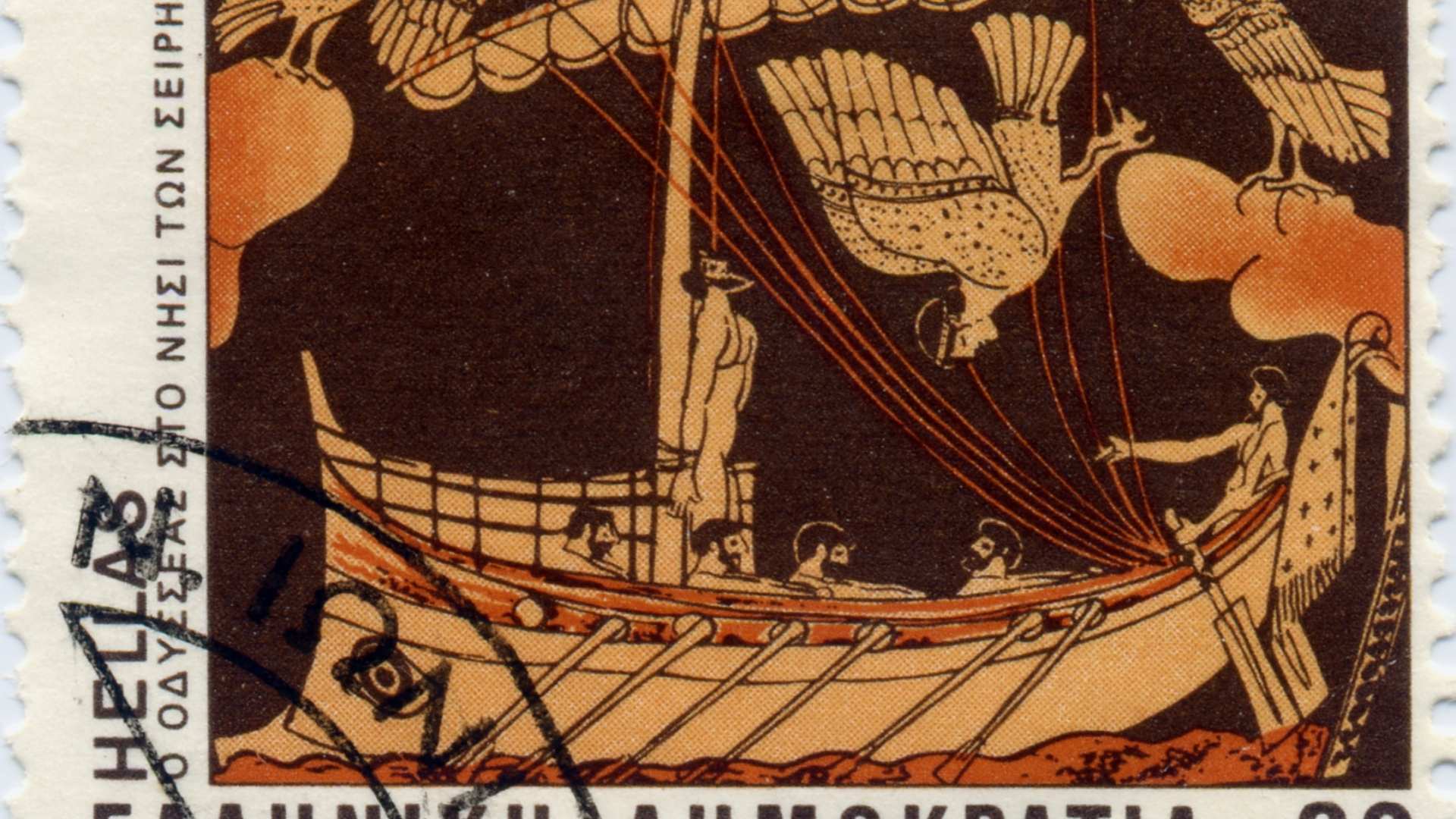
This summer, Christopher Nolan brings Homer’s Odyssey to IMAX screens worldwide. Millions will watch Ulysses – bound to the mast, straining against the ropes, hearing the most beautiful and dangerous song ever written – and many of them will think it is a story about willpower.
But it is actually a story about preparation.
Ulysses didn’t tie himself to the mast because he lacked discipline. He tied himself because he understood something that most have not yet fully reckoned with: that the moment of maximum temptation is the worst possible moment to decide whether to change course. The time to make that decision – calmly, clearly, with full judgment intact – is before the singing starts.
A problem forming
The crisis hasn’t quite arrived yet, but it is certainly forming – and it behooves us to name it, and address it, before it becomes structural.
There is considerable energy being spent discussing two risks posed by AI: the acute cognitive fatigue researchers call ‘brain fry’ and the longer-term decline in reasoning capacity termed ‘cognitive debt.’ These concerns are real and worth taking seriously.
But there is a third risk that can be more consequential for innovation – that AI makes us think too much – specifically about roads not taken.
Before generative AI, commitment to a direction carried natural weight. Alternatives existed, but once a team chose a path, the alternatives receded. Exploring them required real resources – time, experiments, people. That friction was a feature, not a flaw. It gave good decisions the focus they needed to prove themselves.
But generative AI lowers that friction. Every alternative is simply a prompt away, with every pivot costless to imagine. For curious, rigorous minds – precisely the minds that drive breakthrough innovation – the imagination of a better path is almost always irresistible.
I can envision a phase gate review where the direction is sound, the data encouraging, the team making genuine progress – and the conversation quietly pivots to an AI-generated alternative that arrived in someone’s inbox that morning – it was free, and it seemed new. The decision hasn’t changed. The evidence hasn’t changed. It was a Siren’s song tempting a change in course.
I think of this as “commitment erosion” not the inability to choose, but the inability to stay chosen.
As more teams move from AI experimentation into AI-embedded workflows, this dynamic may become structural. Project charters written with conviction will start bending, or never get written or gain alignment under the weight of what AI generated overnight. Stage gates designed for structured risk-analysis may be overwhelmed by informal, always-on AI conversations that make every moment feel like a gate. The discipline of staying chosen – of giving a good decision the time, the space, the runway it needs – will become harder with every improvement of AI tools.
What Ulysses understood
The myth is more precise than most retellings allow.
Ulysses tied himself to the mast after already deciding to sail towards the Sirens and hear them. The mast in this case was not a decision-making tool – it was a tool for commitment-protection instead. He was not trying to avoid the song. Instead, he understood that in the moment of maximum seduction, his judgment would not fail him. The Siren song would convince him that a better path existed closer to them. The song was beautiful, intelligent, and specifically addressed to him – promising exactly what he most wanted to hear.
That, in many ways, is the AI infinite optionality problem precisely. The alternatives AI generates are tailored, plausible, and specifically addressed to the logic of your decisions. They are not obviously wrong. In fact, quite the opposite, they are often seductively adjacent. And unlike the Sirens, they do not stop when the ship has passed. They are always available through the course of a project.
A team that commits to a strong direction and then spends months asking AI whether they committed to the right one does not lack rigor. They lack a mast. And we need to build the mast before the voyage begins – not reach for it after the singing has already started.
There is also a mirror image worth mentioning that comes from the same source. For every team that loses direction in the flood of AI alternatives, there is another that hesitates to even begin with AI at all because of the infinite optionality. Tying down to the mast does not only protect those already at sea. It gives those still on the dock a way to begin – by choosing intentionally, making the most of what I call “artificial diligence” has to offer – with a clause that defines what success looks like and a gate that creates permission to revisit. A commitment with a built-in reflection point is a first step with a map.
Tie down — and why two-thirds of it already exists
The good news is that most organizations already have the infrastructure for this. It just needs to be revisited with commitment erosion in mind. Three elements are critical to this and two of them are already sitting in the project management process, waiting to be strengthened.
Chart the direction once. Apply the clause throughout. Open the gate at every milestone.
Tether your charted direction.
Project charters already exist. But most are often written to satisfy a governance requirement – defining scope, budget, deliverables – not to serve as what behavioral economists call a Ulysses contract: a precommitment made in a moment of clear judgement that speaks on behalf of your best self to your most pressured future self. The fix is one addition: a sentence, written at the moment of commitment, that captures not just what the team will do, and not do, but why this direction was the right choice at this moment with given information. Could your team read it at month four, when three AI-generated alternatives are on the table, and say – “yes, this is still what we decided, and here is why”? If not, the charter needs that sentence. That is the tether – a direction statement – a genuine anchor for the direction charted.
Identify your pivot standard — the Siren Clause.
This is the element that does not yet exist in most organizations, and it may be the most important one in the AI era. When the moment comes and someone asks a team what would need to be true for them to genuinely change course – not what would make change tempting, but what would make it necessary – most will pause longer than expected. The standard exists somewhere, but it has never been written down. Which means in practice it gets negotiated under pressure, with the alternative already on the table and already looking attractive.
The “Siren Clause” is written at the moment of commitment, before the project begins, in the same clear-judgment moment as the Direction Statement. It answers one question explicitly: what would need to be true for us to genuinely change course? It is essentially a ‘conviction clause’ – what evidence would be needed to emerge for that conviction to be overturned.
It travels with the project through every phase – consulted actively each time new data arrives, a stakeholder shifts, or AI generates a compelling alternative. A standard set before the singing starts is the only standard that can survive the singing. Without it, AI alternatives always have the structural advantage of newness, novelty and potential and the original commitment never gets a fair hearing.
Establish your reflection waypoint.
Stage gate processes already exist to take an idea and launch it in the market. But they can evolve into primarily financial checkpoints – on budget, on milestone – while the direction question gets answered informally, continuously, and increasingly with AI doing much of the persuading in the background. The reflection waypoint restores the original function: a scheduled moment at every milestone, not a continuous invitation, at which the team formally asks “is the course still right and is the reason for staying on it still strong.” It converts continuous temptation into periodic structured review.
This applies wherever the organization already creates structured decision points – design reviews, sponsor updates, team onboarding when new voices join mid-project. Each is a moment where the mast can be either reinforced or quietly abandoned. In the AI era, none of them can afford to be silent about commitment.
A transitional moment — and a new leadership imperative
We are in a transitional phase of sorts with AI – moving from one system of working to another, and transitions are always the most disorienting part of any crossing. The more teams practice intentional commitment, the more naturally it will come. Stakeholders will get better at distinguishing genuine pivots from seductive alternatives. Decision-making will evolve to absorb the reality of infinite optionality rather than being overwhelmed by it. What feels like discipline now will become fluency. And the tools themselves will evolve too – from systems optimized to generate infinite alternatives to ones designed to support commitment, judgement and sustained direction. The mast will eventually be built into the ship. It must.
But in this moment – before that fluency exists, while the tools are accelerating faster than the norms – the most valuable leadership skill is knowing when to commit. This means – hearing the alternatives, considering them seriously, through reflection, against the Siren Clause and then turning back to the tether, with conviction, and trusting the course set in the clearest moment.
This is not meant to be anti-AI. Just like Ulysses was not anti-Sirens. He wanted to hear them. He was right to want that. The song was worth hearing.
The question is simply whether you built the mast before you set sail.
Tie yourself to the mast because you trusted your judgment most before they started singing – and that judgment deserves a chance to be proven right.
 Jayshree Seth is a corporate scientist and first-ever chief science advocate at 3M. She is an award-winning innovator, prolific inventor, TEDx speaker and accomplished thought-leader. With a PhD in Chemical Engineering, and 80 patents to her name, she provides a unique and practical viewpoint on the topics of innovation, leadership, culture, and careers through her three decades of experience developing innovative products and technologies.
Jayshree is currently leading gen AI use cases for R&D at 3M. In 2025, she was named to the Thinkers50 Radar and shortlisted for the Innovation Award. In her books published by the Society of Women Engineers (SWE), The Heart of Science – Engineering Footprints, Fingerprints, & Imprints, The Heart of Science – Engineering Fine Print and The Heart of Science – Engineering Blueprint, Jayshree has proposed over 50 actionable frameworks and mental models, useful for corporate innovators, managers, and leaders. All sales proceeds of the book trilogy go to a scholarship for women in STEM administered by SWE.