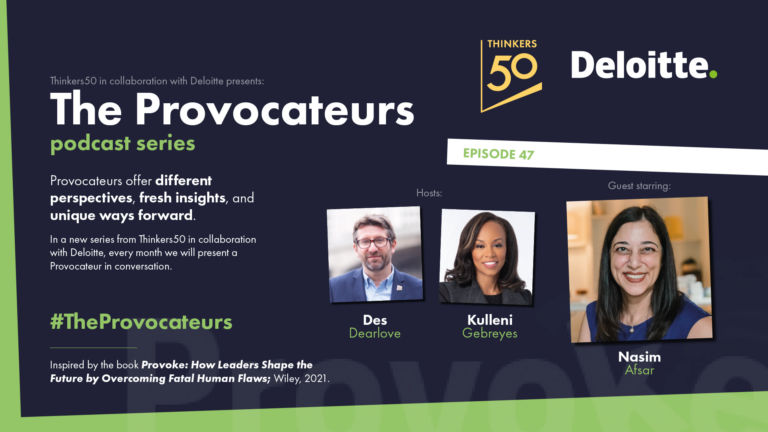
Thinkers50 in collaboration with Deloitte presents:
What if healthcare focused more on health – not simply on delivering care?
Physician executive and global health strategist Nasim Afsar argues that today’s healthcare system sees only a fraction of the person it is trying to help. Healthcare delivery accounts for around 20% of what determines our health, she says; the other 80% lies in factors such as what we eat, how we live, our stress, habits, environment, and genetics. Yet these different streams of information rarely come together.
The author of Intelligent Health, Nasim explores how unifying that data could enable a shift towards healthcare that is personalized, predictive, preventative, and participatory – focused on people’s life goals rather than simply their clinical measures. AI could help turn an abundance of fragmented data into meaningful insights, while creating opportunities for clinicians to spend more time on the human elements of medicine: connection, judgement, and trust.
But AI is no panacea. Nasim argues that applying powerful new technology will likely deliver only incremental gains. She suggests starting by deciding what kind of health system we want to create – and then using AI, with intentionality, as one of the tools to build it.
This podcast is part of an ongoing series of interviews with executives. The executives’ participation in this podcast are solely for educational purposes based on their knowledge of the subject and the views expressed by them are solely their own. This podcast should not be deemed or construed to be for the purpose of soliciting business for any of the companies mentioned, nor does Deloitte advocate or endorse the services or products provided by these companies.
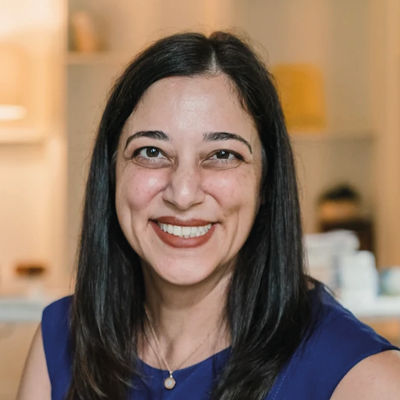
Author, Intelligent Health
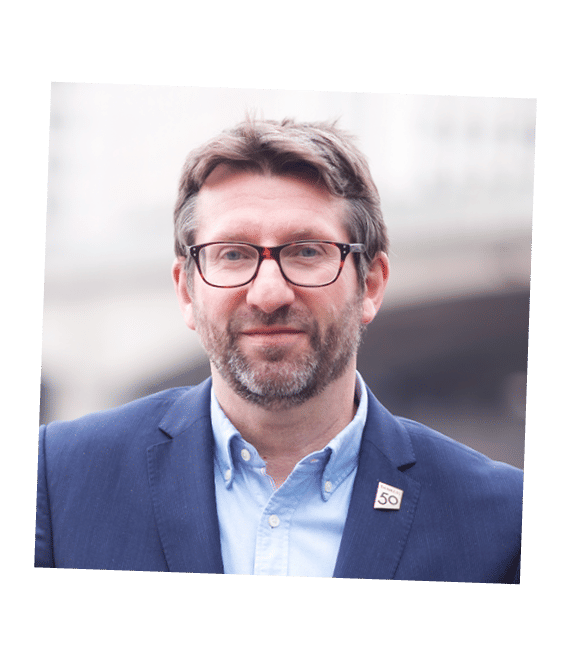
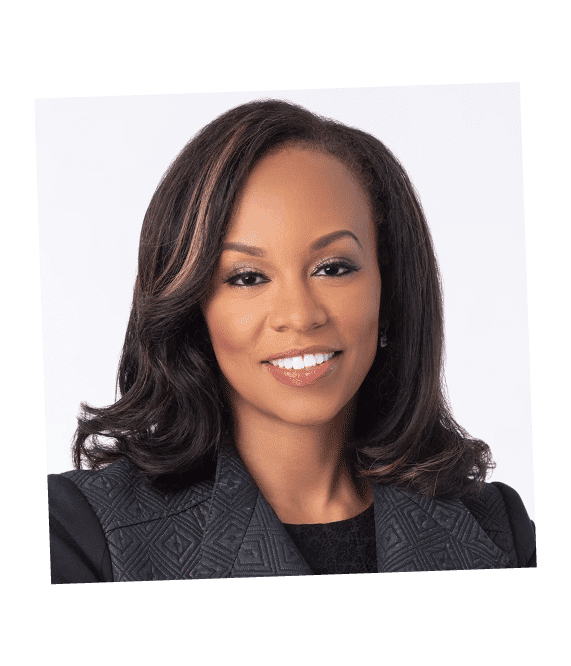
Vice Chair and US Life Sciences and Heath Care Industry Leader, Deloitte








Inspired by the book Provoke: How Leaders Shape the Future by Overcoming Fatal Human Flaws; Wiley, 2021.
Des Dearlove:
Hello, and welcome to The Provocateurs Podcast. Our aim with these conversations is to provoke you to think and act differently by bringing together insightful leaders who offer fresh perspectives on some of the most important challenges facing business and society. I’m Des Dearlove, co-founder of Thinkers50, and Provocateurs is a collaboration between Thinkers50 and Deloitte.
My co-host today is Kulleni Gebreyes, vice chair and US life sciences and healthcare industry leader at Deloitte.
Kulleni Gebreyes:
Thank you, Des. It’s great to see you. It’s great to be here. I am especially excited about today’s conversation. Our guest today is Dr. Nasim Afsar, who’s a physician executive, a global health strategist, and the author of Intelligent Health: The Movement to Unify Data, Harness AI, and Empower People to Thrive.
Now, Nasim has spent two decades working across almost every part of the healthcare ecosystem. She served as senior vice president and chief health officer at Oracle, chief operating officer at USI Health, and health roles at UCLA, including associate chief medical officer. Her work spans health system operations, population health, technology, strategy, and public policy, including — Nasim, right — work with the White House health organizations and partners across pharmacy, insurance, retail, and public health.
So Nasim, welcome to Provocateurs.
Nasim Afsar:
Thank you so much, Kulleni. I’m so excited to be here with you guys. Looking forward to the conversation.
Kulleni Gebreyes:
Yes, Nasim. We’ve got a lot to cover, a lot of questions that we have for you.
Now, Nasim in Intelligent Health, you argue that today’s fragmented and reactive approach to healthcare is just not sustainable. You’re also offering us a blueprint for a person-centered system in which individuals can unify and control their health data, use AI to get really meaningful insights, and move from treating illness towards preventing it.
But you began as a physician and now you’re doing all these amazing and great things. Tell us that story of your journey of realizing that individual health meant finding opportunities to change the system itself. Just give us an inside view on the journey you’ve taken of discovery.
Nasim Afsar:
Yeah. It really has been a phenomenal journey, and I have to say such a privilege to get to be in healthcare, especially at this particular moment in time, Kulleni, as you can attest to that.
I trained as an internal medicine physician and was on faculty and practicing as a hospitalist. And honestly, I thought I was going to do that until the day I died and I would be perfectly happy. I found it incredibly fulfilling. The ability to practice acute medicine, to have patients come in with a problem that needed to get solved, and that that problem needed to get solved, bringing a team of incredibly smart and dedicated people together from people from different specialties to our nurses, our pharmacists, our social workers. We all had to come together around the patient to problem solve.
And I think I would have been very happy continuing down that path, except about six months in, I was reflecting on a couple of things that I was seeing on the healthcare delivery side at bedside. We were delivering care in a highly variable way. If the census was high in the ED and the ED was crowded, we missed things on patients. If we had new interns or residents, these are the physicians in training, we miss things on patients. And so it just seemed wrong that depending on these variables that happened rather frequently, that people would get harmed or not get the same quality of care.
And this is you have to mind, not to date myself, but I’m going to anyways. This was back now two decades ago where quality, and safety, and high reliability medicine wasn’t really robustly established. In fact, I didn’t know what the name was for what I was seeing. And so it really kind of took a journey of discovery at that point where I ended up at Intermountain Healthcare and did my quality training there to really understand what the pillars of high reliability medicine are, quality and safety are, and then advocating for that with our C-suite, which I was very fortunate to get the support. And we created our very first position in quality and safety at the medical center.
And once I went from taking care of 20 patients at bedside to seeing that the programs that we built impacted hundreds, thousands, tens of thousands, hundreds of thousands of people, I knew that this is the space that I needed to be in to make sure that that single patient who’s coming in at a time where the ED is busy or we’ve got new people on service is going to get the exact same care as someone else who is there during what’s considered a typical day.
Des Dearlove:
Now you distinguish health from care. What could change if health, I mean, not simply delivery of care, became the primary focus of the system? How would that change things?
Nasim Afsar:
Yeah. So to me, health is the ultimate goal. That’s what we’re trying to strive for. That’s the space that most of us live in for most of our lives. Care many times is what happens when we fail at health. That is kind of the root cause of chronic disease management.
And again, what do I mean by that? You have a young professional who’s working really hard, long hours, not active, not eating well. They start gaining weight, their blood pressure starts going up, you add a decade to that and now you have someone who is pre-diabetic, or diabetic and has high blood pressure. Those were things that could have been prevented and avoided had we focused on health and addressed those root causes of disease.
So the majority of the care that we provide in this country, and if you look at the top causes for mortality and morbidity, what leads to human suffering and the top causes for cost in this country derive from, again, cardiovascular disease, metabolic disease, things again that we could actually address in health.
Now that doesn’t mean that sometimes we don’t need care, right? Sometimes acute things happen. People get cancer diagnoses, they get in a horrible accident and you need to have care, but that is a small portion of people during a small portion of time. And so it’s really important to me to separate out health and care because we strive for health.
And Des, you asked again, what happens if we focus on health versus care? If we focus on health, then we have a population that over the years is living healthier, is thriving, is getting to do the things that they want, which includes getting to pick up their grandkids, getting to enjoy more times with family, getting to have hobbies where they’re engaged and involved in life. But for that, we need to have health.
Des Dearlove:
So to some extent what you’re saying is in a lot of situations, prevention, as we know, is better than a cure really, if you can stay healthy for as long as possible? Yeah.
Nasim Afsar:
Absolutely. Absolutely.
Des Dearlove:
Yeah.
Kulleni Gebreyes:
Nasim, there’s so many things that you’ve said that truly resonate, including starting the practice of medicine when physicians didn’t know what quality improvement and continuous improvement, and were in full denial about medical errors that occur and the frequency of all of it. And so your story really resonates with me as well as we think about how do we change healthcare.
I want to pull on the thread though that you and Des have started around prevention. So I’ve been in healthcare 25 plus years, stopped counting after that, but we’ve talked about prevention that whole time. And you’re describing having personalized, predictive, preventative, and participatory care. So what would it actually take to move the mindset and the money towards such a model?
Nasim Afsar:
Yeah, that’s a really great question. And the great thing is that sitting here today in 2026, we actually have an answer for this. Whereas in our early days of the practice of medicine, we actually could not have pulled this together.
And this kind of brings me to the 20% problem, which is we know that healthcare delivery systems are helping support patients having access to only 20% of what determines their health. That’s what happens within healthcare delivery systems. That’s the diagnosis, and the labs, and all of what happens within healthcare delivery system. The 80% of what determines our health, as you know, is the air we breathe, the food we eat, our stress, our habits, our genetics. And it’s quite rare in today’s healthcare delivery for us to combine that 80% with the 20 to see the entire person. And I don’t know another field where we are making such serious decisions solely based on 20% of the data.
I was thinking about this when I was … I’ve been traveling a lot over the last 18 months and I was thinking about this concept while I had just boarded the plane. And I thought, how would I feel if the pilot came on, and she was like, “Ladies and gentlemen, thank you so much for flying with us. We know you have lots of options. Grateful that you’re here. I just want to let you know I only have 20% of the data to get you to the destination safely, but please don’t worry. I am highly trained and very well-intentioned.” I was like, “I would be running out of this plane and I am quite confident most people would.” And yet we are doing that in healthcare.
I talk about in the book about a patient that I got to take care of in clinic after she had been discharged from the hospital with uncontrolled diabetes, really life-threatening high blood sugar levels that required her to be in the intensive care unit and then transitioned to the floor, and now I was seeing her in clinic. And we on the healthcare side have a label for people like her who continue to come in. We consider them as non-compliant, as frequent flyers. We’ve got really, really colorful words for that.
And so I’m reading her chart and she’s got these words plastered all over her medical chart. So I have a preconceived notion of who I’m going to go see. And despite her best efforts, she has continued to come back in to the hospital with high blood sugars. As a well-trained internist, I had a script of what were the medications, the diets, the activities that she needed to do, what were the resources that we were going to set her up with, including nutrition counseling.
And so I was really proud of myself thinking that I went through what was evidence-based practice and bestowed upon her all this really great knowledge that was going to save her life. And if it wasn’t for a slight pause because of her affect and how withdrawn she was during our visit, if it wasn’t for a slight pause, I would have left and that would have been the end of that, as it had been the case many a times before when she’d been seen in clinic.
But I paused and I asked her how she felt about the plan. And what she said kind of honestly changed the course of my career in terms of how we deliver care and how disconnected we are from the person. She said she had lost her job, which meant she had lost the apartment that she was renting, which meant that she was living in her car. So the medications that we had given her that required refrigeration was just not a possibility. The chicken and fish that we wanted her to eat were not a possibility. And activity was really hard because she often parked in places that weren’t safe. So she was staying sedentary in her car. And I was like, “Wow, we have spent so much medical knowledge, time, effort, and cost getting her blood sugar perfect during these brief moments when she’s in the hospital, not at all understanding and taking into account the fact that that 80% is really driving what’s happening.”
And so you asked kind of what does it take for us to be able to do that? It starts off with unifying that 20% with the 80%. And that’s the first step. We need a couple more steps, but that’s a critical first step so that we can actually see the whole person.
Des Dearlove:
Let’s stay with the data and the unifying the data because I mean, it seems to me we’ve got all these wonderful … If we’re fortunate enough to have all these wonderful wearable gadgets and things, I don’t even know where all that data’s going. It’s certainly not being channeled into a unified form, even those of us who’ve got those sorts of things.
I mean, your example was very vivid about how information and data can be very scattered really. And if we’re not careful, we only look at the bit that’s in front of us. But how can we unify that? And who actually, if you like, who owns the data, our own health data?
Nasim Afsar:
Yeah. I was smiling, Des, because this is one of my favorite topics to talk about. The fact that we live at a time when we are producing the most amount of data ever, we have far more data than we have ever had before, and yet we are quite insight poor.
I can’t tell you the number of times I’ve sat down with highly educated, intelligent people who are like, “Here’s one wearable data, here’s the app data, here’s my EHR, but I don’t feel good.” Or, “What does it all mean together?” And I think in our enthusiasm to support the consumer in their health journey, we have created further silos of their data and we haven’t figured out how do we actually bring all of that together and integrate it. Again, we’ve got the 20% of the data from healthcare delivery. Now we’ve got 80 that’s getting generated in this other space, but that 80 is comprised of 10, 15 different streamlines, and they’re not coming together.
The great thing is, and again, this is what makes me really excited about today versus two decades ago when I started medicine, and we were literally on paper and pen, and we couldn’t collate stuff together, is that today the technology exists for us to bring all of these data streams together. We can actually unify the 20 with all the bits of the 80 that give us our life experience, our social determinants of health.
And we’ve seen that with some of the apps and wearables that we have. They are now over the last six months to a year are giving us an option to pull in and bring in other data. We’re also seeing some large language models also giving us the capability to be able to bring data together. So the great thing is this is not a technology limitation, but it brings up the very critical question, which was the second part of what you asked, which is who owns the data?
And I think we need to have a very robust discussion as a society around who owns the most precious asset in 2026, which is our health data. Our data is the most precious asset, the subset of that that is most precious is our health data because we are giving it away. We are giving it away by uploading it into large language model chats. We are giving it away by uploading it into wearables and apps.
I am a major supporter of all of these options are really good, but as I describe in the book, the consumer of health and care, the person who is producing the data should ultimately own that data. We have precedence for that in healthcare. I know it doesn’t feel like it, but legally we do own that data, and we can get it and have access to it. It’s got to get better, but there is precedence for ultimately the fact that we own that data and all of this can come together as an asset that enables us to be healthy.
It doesn’t mean that our devices, or our apps, or our healthcare delivery system doesn’t continue to collect their siloed data, but it means we are the only ones who get to see the totality of that data and have access to the intelligence that gets created from a hundred percent of that data to be able to advance our health.
Kulleni Gebreyes:
Nasim, there’s so much insight in what you’ve just described. And from a Deloitte perspective, we have done a bit of research talking about the consumer being the new CEO of their own health. I like your central thesis of the data belongs to the individual, but we don’t have a system currently where you both get the optimal benefit, but you also get to decide how, and where, and what it’s used for.
Now, I will say though, as a former practicing physician, also when people would come with all of that data, your head starts swirling. You’re like, “How many blood pressure readings? How much from the five visits that you had?” And so to your point, technology’s here, AI is here.
But when we talk about AI, because I’m going to pivot a little, we talk about how we create efficiency, maybe understanding the data, summarizing the documents, et cetera, et cetera. But you’ve actually introduced a concept that says, “Yes, AI can create efficiency and effectiveness, but that AI can actually make us bring humanity back to healthcare.”
So what’s your thought on where does AI support judgment in clinical decision making versus where does AI support that human relationship and interaction? You’ve given us great examples so far. What are examples of some of those differences?
Nasim Afsar:
Yeah, I think that’s where the intentionality with which we implement AI can really make a difference. And if we have, again, clarity around, we are trying to promote and support that connection and trust that we know based on evidence ultimately leads to a person being more receptible to the medical advice that they are getting and actually then moving forward with that. If we are focusing on bringing that humanity, again, that connection, that trust back to healthcare, then how do we with intentionality design the system to enable us to do that?
I think one of the things that I have personally struggled with as a physician is speaking to a lot of healthcare delivery systems, and everyone from frontline physicians to executive leadership, a lot of times I hear themes of fear. It’s like, “Is AI replacing me? Am I going to have a job? Is it going to do a good enough job? It cannot do a good enough job compared to what I do.”
There is a lot of talk and therefore decision making based on fear versus saying, “AI is a powerful tool. It’s a tool though, and how you use it and whether it benefits or harms depends on how effectively you leverage that tool.” And so it is a powerful tool. It does enable you to scale at rates that we cannot with other tools where we are acting one patient at a time. But the intentionality with which we use it, the appropriateness of which we use it, the risk, harm, benefit has to be the same.
And so if we think about it that way and we think about how do we bring humanity back to healthcare, there are a couple of really interesting ways that one can integrate AI. And I’ll use a real life example that I have seen in practice and then kind of what my ideal future state would be.
And I’m going to pick on diabetes again, because again, it is such a highly prevalent condition that does cause both individual harm and societal cost. So there was an international system that I was working with and they had used AI in diabetes care for their population to try and create kind of what we talked about again, the predictive, preventive, participatory, intentional care delivery. And the way that they had done that was they had increasing rising rates of diabetes in their population. They brought in their healthy patients and pre-diabetic patients, and they said, “Based on all the data that we have on you, you are likely going to be diagnosed with diabetes in the next five years. Now on this side, we have a list of factors that we can toggle back and forth together that can positively impact your risk of getting diabetes, meaning you won’t get diabetes until later. So let’s go through them together.”
And so the physician and the patient would sit there and the physician would say, “If you were to go to our nutritionist and lose five pounds, here’s what it looks like. If you lose 10 pounds, if you lose 15 pounds, now you’re not getting diabetes for seven years.” The patient’s like, “I’ve tried weight loss. That just doesn’t work. I’ve tried for five years now to lose weight. It’s not working.” “Great. If you go on Metformin, a common medication for pre-diabetic and diabetic patients, if you go on Metformin, here’s what’s going to happen to your risk of getting diabetes. Now you’ve got 10 years before you get diabetes,” and so on and so forth.
So you go through these different risk factors. If you go from four drinks a week to two drinks a week, here’s what it looks like, one drink, zero drinks. I’ve never saw anyone take that. But you can imagine the kind of conversation you’re having, again, compared to the one that I had in the exam room with a diabetic patient that I saw, which was like, “Here’s what we’re doing. It’s evidence-based. It works, except it works in theory and doesn’t work in people’s lives.” This now took the factors and enabled the physician to leverage her expertise to connect with the patient and help him figure out what was the right path for him. And now he was kind of on the hook because he had decided this is the thing that he was going to do, so he’s going to do it and when he comes back, they can kind of look at those factors together.
So that’s a way today where one can effectively use artificial intelligence and machine learning to say, “How do we, instead of again, a physician behind a computer dictating out what needs to get done, can actually sit facing the patient, working through something together, and using her expertise to really kind of push, and advance the health and care of the individual.”
I’ll give you, because I know your listeners like to think about the art of the possible, so I will throw this out because I am really excited about this future. We have to rethink how we are managing chronic disease, not just in this country, but across the globe. And so again, back to the diabetes example. Today, if a person has diabetes annually, at least annually, they’re going to go in for their annual checkup with their physician. Hopefully they remember that they need to go in and they scheduled an appointment because it still rests on the patient to do that.
But let’s say they remember, they scheduled their appointment, they go to see their provider, whether that is a primary care doctor or an endocrinologist. At that point, the doctor takes a history, gets some updated information, then says the patient needs a set of labs that they order for that the patient, then needs to go and get done. The patient needs to have a retinal exam to see if there are any impacts of diabetes on their eyes. That gets ordered for the patient to go do. The physician has the patient take off their shoes and socks to check their feet for foot ulcers.
And then the patient leaves, is doing all of this stuff. The results are trickling into the physician. The physician’s office is looking at these results, communicating back and forth with the patient. The physician ultimately needs to decide, is the treatment plan the same? Does it need to change? Are we increasing? So all of this stuff is kind of happening in a somewhat disorganized way.
As someone with a chronic disease, you kind of want to go be like, “Okay, this is your plan. Here’s where you are and here’s your plan.” Well, the thing is, in today’s world, if you have your patient with diabetes, they can get a communication that it’s time for their annual visit. That can be automated. We don’t need to have humans in the loop to do that. Based on the way that they prefer their communication, they could get a call, they could get a text, they could get an email.
So let’s say you get a text. There’s a link, “It’s time for your annual diabetes visit.” You click the link, it takes you to a checklist of stuff that needs to happen. Number one on the checklist, you need to have the evidence-based standard lab test that you need to do. It can, based on your coverage and your geography, give you options of where you can go to get your labs drawn. You can go ahead and just schedule it right there. You can go on and based on, again, your coverage and geography, schedule where to get your retinal exam done.
And a lot of these actually don’t need to be done in traditional healthcare today. We have lots of availability of labs and places that are very convenient, like the pharmacy down on Main Street where you can actually go and be able to much more easily, better parking, less wait time, actually get this stuff done.
You can take off your socks and shoes at home, and take a video, and upload that, and computer vision can look for ulcers on your feet. You can talk to the app and update your history. It can ask you questions the way that your doctor would in the voice language that you prefer. And you can have a two-way dialogue. If you prefer to type it, you can do it. You know this stuff. Basically my point is you can have this done in the way that you prefer, and that you want, and be able to get all of this information.
Then as the information comes back, it gets aggregated. The intelligence can then take all of that information, and based on evidence-based guidelines, come up with a list of recommendations. The medication dose needs to increase to this degree. The weight has increased. What are the evidence-based things or things that have worked for the patient in the past that we are going to do? It looks like now maybe we have some hypertension. The patient reported some shortness of breath. We explore that with, are they developing some cardiac or heart problems? Can kind of compile that list.
We actually now free up capacity for them to take care of patients with more complex disease, to actually be able to get those newly diagnosed patients in much more quickly.
And so that to me is, again, how we can leverage this both from a real world and a, this is what’s really possible. The only reason it’s future state is we are not doing that as standard of care, but here’s what’s possible if we effectively leverage AI to think about how we do better healthcare.
Des Dearlove:
You’ve kind of anticipated my next question a little bit because I was going to ask you, because you’re talking about taking the human beings out of the loop. We don’t need them in the loop in a lot of these situations. As AI becomes more embedded in these decisions, which bits should we continue to have human intentionality, to use your word over? Which bits can’t we afford to delegate to the technology? Or are we saying in time we can delegate all of it?
Nasim Afsar:
Yeah, that’s a great question, Des. I think again, that’s where intentionality becomes really critical, and having clarity around what’s the ultimate goal that we are trying to deliver. So if the ultimate goal that we’re trying to deliver is better health, there’s a series of things that go into better health, including making sure that the patient is on evidence-based guidelines or real world data. It’s that the patient feels connected and has trust with the clinician.
And I think they’re like these, I would say, and we can have a whole conversation on this, but a handful of things that you need to have to get to that outcome. There are elements of it that absolutely, again, as evidence builds up, should be removed from a human in the loop. And I think that’s going to evolve. And as a physician, that gives me an opportunity to continue to learn, to grow, to upskill, to continue to add value.
I think in terms of the other components, some of which include human connection, trust, I would like to say we should never delegate that to AI. But I will say, again, having worked with a number of marketing groups that have done consumer surveys, there are certain consumers that actually feel more comfortable and find it more easily to receive advice from an avatar. And there are others that are like, “Absolutely not. I need to see my physician in person to go through that.” And then there are others that are like, “I’d be happy seeing my physician on Zoom.”
And so I don’t think it should be a one size fits all. If the goal is we want to get to better health based on the individual preferences, there are going to be components that we can push off to AI. And there’s components for that person that we should not push to AI because that’s not going to get us to goal.
Des Dearlove:
You also … Sorry, Kulleni, I just wanted to follow up.
Kulleni Gebreyes:
Yeah, go ahead.
Des Dearlove:
I’m just fascinated because I’ve heard the phrase, you’ve used the phrase, always on and always yours healthcare. And you’re alluding, I think, to this notion that healthcare shouldn’t be one size fits all. It should be a personalized experience. Can you say a little bit more about that?
Nasim Afsar:
Absolutely. I think to me, that’s the difference between saying better healthcare is when your blood pressure is at this level, your stress level is at this level, your diabetes control or heart failure is at this level. It’s the difference between that and saying better healthcare is you are thriving, you feel good, you are doing the things that you want. And now what does it take from the set of conditions that you have to get you to operate and function at that level?
And I do think that that’s an individual choice. I think we’ve seen in healthcare over and over again, when we try to impose what we think should get done versus where a person’s goals are, we miss. And so to me, the always on is we now can get continuous data. My health should not be monitored once a year, or twice a year, or honestly once a month whenever I see my physician because that’s not when health happens. It happens in all of those in between spaces. It happens based on when I go to bed, what I eat, what my stress habits are, when I’m feeling overwhelmed, what my genetics are, and what my chronic conditions are. It’s all of that together. But it’s always on, always monitoring, always looking in a predictive fashion at what are you at risk for?
But then it’s always yours because we’re moving to an era of medicine where the individual is saying, “This is what I want.” And we have now given the individual choice through this several hundred billion dollar consumer market to go and pick and choose what they want. There’s an opportunity in there for us to actually have that make sense, but focus on the individual, focus on what they want, what their goals are versus again, where we think from healthcare they should be, which they have demonstrated over and over again, that’s not where they’re going to be.
And I think that’s really exciting. I think, again, as a clinician, I think for us to actually be living through a time where we could deeply understand what are the things that matter to a person. No one should wake up in the morning and be like, “I hope my blood pressure is 120 over 80 today.” They should wake up in the morning and say, “I hope I am running and keeping up with my kids. And I hope I’m having a meeting without having a foggy brain. And I hope …” Like, we need life goals. We need human goals. And the clinical conditions that we have ultimately help support those broader life goals that we have. And I think this just gives us a really unique opportunity to look at what does personalized health and care look like, and how do we deliver it, because we can today.
Kulleni Gebreyes:
Nasim, I really appreciate how you’ve summarized that. You are actually reminding me of a conversation I had 10 plus years ago as we were doing brainstorming with the provider healthcare system on how to better meet the needs of the lives that they were managing. And I’m an ER doc, so I was like, “We got to know what they need and give it to them. And get them in and out of the door as fast as possible.” And there was an internal medicine physician who said, “We need to shift this conversation from medical needs to life goals,” which I think is really at the crux of what you’re saying.
There’s something else that you said though that I want to maybe click on for more detail, which is you’ve mentioned the word trust a couple of times. And we’ve talked about trust being an integral part of any communication, any care, any healing that’s going to happen.
So what is the role of trust in achieving health in receiving care? And if you assume that trust is the bridge in the relationship between health, and care, and the individual, where’s the center of gravity for that trust? Is it with a physician, a clinician, a platform, the consumer industry that’s meeting their needs? What are your thoughts on trust?
Nasim Afsar:
Yeah, that’s a great point, Kulleni. And I think this is, again, yet another one that I wish we would have more robust conversations around because I do think as human beings, that is one of those core tenants that impacts, do we take the advice that we get?
And it’s interesting to me because I’ve definitely seen that in healthcare where someone doesn’t trust their provider, and they don’t take the advice even though the advice is actually quite clinically sound and evidence-based. And someone else trusts their provider, and they do take the advice and they get healthier. Someone trusts the data that they’re getting from their wearable and they make lifestyle changes based on that. Someone doesn’t trust it and they’re on online forums trying to figure out all the different ways that things are wrong with it.
And I’ve seen that in myself, both with healthcare providers and then the consumer space in terms of if I get a notification in the morning from my wearable that I did not get good sleep and I should take it easy, and yet I wake up and I’m like, “But I feel like I can go run a couple miles,” I’ve gotten rid of those wearables because I’m like, “I’m not trusting you to know where I am.” Or a provider who said, “You need to have this surgery,” and I didn’t trust the provider. I didn’t take that advice. I went and sought second and third opinions with people that I felt like I could trust. So I think this is such a key driving piece, not just in healthcare, but even in life more broadly, but definitely in health in care as we look at everything from wearables to medical advice.
And I think where this further becomes more complicated with AI is there’s kind of two levels of trust that we have to reckon with as consumers. There’s the trust in the algorithm. Do I actually trust that this algorithm knows me? If you’re a more discerning consumer, you’d say, “Can I trust that this algorithm was trained on people who look like me, who are like me? Is it including me? Is it not? Is it actually understanding me?”
And then the second piece of trust is do I trust the organizations that are building these algorithms? Are they building it and leveraging it to get my data? Are they building it and leveraging it because they want to advance my health? And so I think this issue of trust becomes multilayered and is really critical for us to have direct conversations with.
You asked the great question of where does the responsibility of trust lie? And I would say at every single layer of that where people are dealing with health and care of an individual. So it absolutely has to lie between the healthcare delivery system and the individual for the 20%, but it also has to lie between me and the place where I do my genetic testing, and between me and the wearables that I have, and between me and the place I get my lab test. It has to be at every single layer because it’s a basic human piece that’s going to drive decision making and is ultimately going to lead to those outcomes that we’re interested in, which is better health and care.
Des Dearlove:
We’ve covered a lot of areas and you’ve sort of touched on, I mean, we couldn’t have this conversation without touching on the bias issue with AI, I think. We’re running out of time. We haven’t got time to do justice to that, but I think it’s important that we acknowledge it and have it in the conversation.
But Provocateurs is all about challenging accepted truths. So we always ask this at the end of the podcast. What’s your provocation? What beliefs about health or healthcare should leaders and the rest of us leave behind and what should replace it? If you could provoke our listeners to do one thing or to think about one thing, what would it be?
Nasim Afsar:
Yeah, I’d say probably the biggest one would be that AI is the panacea for all of our problems in healthcare. It’s not. It is an incredibly powerful tool that can help move us forward, but only if it’s used with intentionality.
And I see people apply AI in lots of different spaces. And I feel like the majority of the time we are having the wrong conversations and making the wrong investments because we are leveraging AI for point solutions that give us incremental results, and that we need to have different conversations. And again, with intentionality, then leverage AI to build a better system.
But the fact that, again, and I’ve seen this across industries from providers to payers, to pharma, to food and beverage, to tech companies where there’s a sense of like, “well, AI will save us. If only I am implementing it in these places, then I’m going to get the results that we want,” versus saying, “What is the system that we are building and what are the set of tools that we need to actually be able to get us there, one of which is artificial intelligence.” So I would say that’s something that I would leave behind.
Des Dearlove:
We’re out of time, Nasim. Thank you for joining us and for provoking us to rethink not simply how we deliver care, but how we understand and take responsibility for health itself.
Kulleni Gebreyes:
Nasim, thank you so much, yes, for your thoughts, for the great book, and the insights that you’ve shared with us today.
Nasim Afsar:
It’s been wonderful to have this conversation with you both. Thank you.
Des Dearlove:
And thank you to everyone listening. Please do join us again for another episode of Provocateurs from Thinkers50 and Deloitte. Until next time.
This podcast is part of an ongoing series of interviews with executives. The executives’ participation in this podcast are solely for educational purposes based on their knowledge of the subject and the views expressed by them are solely their own. This podcast should not be deemed or construed to be for the purpose of soliciting business for any of the companies mentioned, nor does Deloitte advocate or endorse the services or products provided by these companies.
| Cookie | Duration | Description |
|---|---|---|
| LANG | 9 hours | Linkedin set this cookie to set user's preferred language. |
| nsid | session | This cookie is set by the provider PayPal to enable the PayPal payment service in the website. |
| sp_landing | 1 day | The sp_landing is set by Spotify to implement audio content from Spotify on the website and also registers information on user interaction related to the audio content. |
| sp_t | 1 year | The sp_t cookie is set by Spotify to implement audio content from Spotify on the website and also registers information on user interaction related to the audio content. |
| tsrce | 3 days | PayPal sets this cookie to enable the PayPal payment service in the website. |
| x-pp-s | session | PayPal sets this cookie to process payments on the site. |
| __cf_bm | 30 minutes | This cookie, set by Cloudflare, is used to support Cloudflare Bot Management. |
| Cookie | Duration | Description |
|---|---|---|
| l7_az | 30 minutes | This cookie is necessary for the PayPal login-function on the website. |
| Cookie | Duration | Description |
|---|---|---|
| CONSENT | 2 years | YouTube sets this cookie via embedded youtube-videos and registers anonymous statistical data. |
| _ga | 2 years | The _ga cookie, installed by Google Analytics, calculates visitor, session and campaign data and also keeps track of site usage for the site's analytics report. The cookie stores information anonymously and assigns a randomly generated number to recognize unique visitors. |
| _gat_gtag_UA_10408481_1 | 1 minute | Set by Google to distinguish users. |
| _ga_ZP8HQ8RZXS | 2 years | This cookie is installed by Google Analytics. |
| _gid | 1 day | Installed by Google Analytics, _gid cookie stores information on how visitors use a website, while also creating an analytics report of the website's performance. Some of the data that are collected include the number of visitors, their source, and the pages they visit anonymously. |
| Cookie | Duration | Description |
|---|---|---|
| NID | 6 months | NID cookie, set by Google, is used for advertising purposes; to limit the number of times the user sees an ad, to mute unwanted ads, and to measure the effectiveness of ads. |
| test_cookie | 15 minutes | The test_cookie is set by doubleclick.net and is used to determine if the user's browser supports cookies. |
| VISITOR_INFO1_LIVE | 5 months 27 days | A cookie set by YouTube to measure bandwidth that determines whether the user gets the new or old player interface. |
| YSC | session | YSC cookie is set by Youtube and is used to track the views of embedded videos on Youtube pages. |
| yt-remote-connected-devices | never | YouTube sets this cookie to store the video preferences of the user using embedded YouTube video. |
| yt-remote-device-id | never | YouTube sets this cookie to store the video preferences of the user using embedded YouTube video. |
| yt.innertube::nextId | never | This cookie, set by YouTube, registers a unique ID to store data on what videos from YouTube the user has seen. |
| yt.innertube::requests | never | This cookie, set by YouTube, registers a unique ID to store data on what videos from YouTube the user has seen. |
| Cookie | Duration | Description |
|---|---|---|
| DEVICE_INFO | 5 months 27 days | No description |
| loglevel | never | No description available. |
| m | 2 years | No description available. |


Thinkers50 Limited has updated its Privacy Policy on 28 March 2024 with several amendments and additions to the previous version, to fully incorporate to the text information required by current applicable date protection regulation. Processing of the personal data of Thinkers50’s customers, potential customers and other stakeholders has not been changed essentially, but the texts have been clarified and amended to give more detailed information of the processing activities.