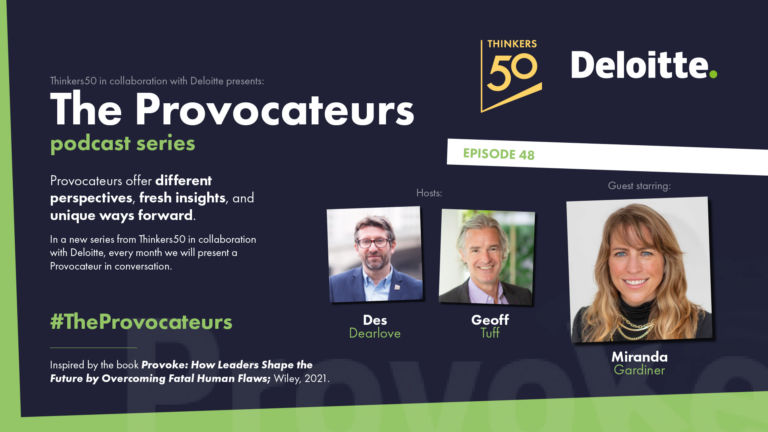
Thinkers50 in collaboration with Deloitte presents:
The rapid expansion of AI is driving unprecedented demand for digital infrastructure. But how can the industry reconcile this growth with its commitments to reduce carbon emissions?
Miranda Gardiner, Executive Director of iMasons Climate Accord, argues that the challenge is also an opportunity to accelerate innovation in sustainable infrastructure, from low-carbon construction materials and energy-efficient facilities to better measurement and reporting of emissions.
In this episode of Provocateurs, recorded at Deloitte HORIZONS during Climate Week in New York, Miranda explains how Climate Accord is helping some of the world’s largest technology companies collaborate on solutions that they could not achieve alone. She explores the importance of common standards, transparency, and sharing lessons learned – including failures – to accelerate progress across the industry.
In conversation with Thinkers50 co-founder Des Dearlove and Deloitte’s Geoff Tuff, she also examines leadership. She argues it is not the pursuit of individual competitive advantage but sharing knowledge and working collectively that turns sustainability commitments into practical solutions.
This podcast is part of an ongoing series of interviews with executives. The executives’ participation in this podcast are solely for educational purposes based on their knowledge of the subject and the views expressed by them are solely their own. This podcast should not be deemed or construed to be for the purpose of soliciting business for any of the companies mentioned, nor does Deloitte advocate or endorse the services or products provided by these companies.
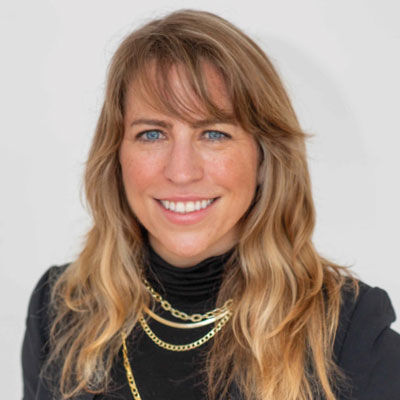
Executive Director, iMasons Climate Accord
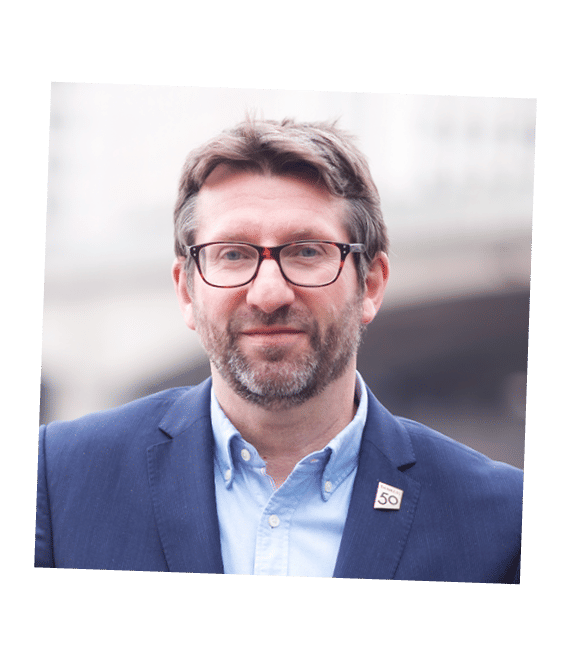
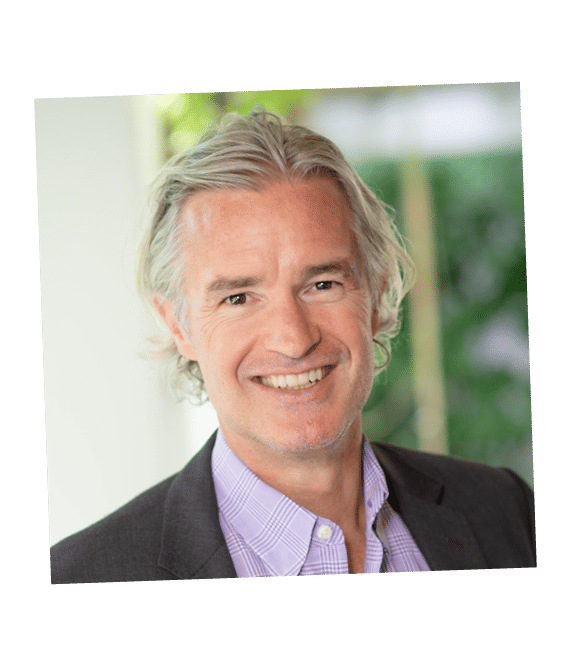
Global Sustainability Leader for Energy and Industrials, Deloitte








Inspired by the book Provoke: How Leaders Shape the Future by Overcoming Fatal Human Flaws; Wiley, 2021.
Des Dearlove:
Hello, and welcome to this special episode of the Provocateurs Podcast, recorded at Climate Week, New York City, 2026. Our aim with these podcasts is to provoke you to think and act differently through conversations with insightful leaders who offer new perspectives on traditional thinking.
I’m Des Dearlove, co-founder of Thinkers50, and this is a collaboration between Thinkers50 and Deloitte. My co-host today is Geoff Tuff. Geoff is Deloitte’s global and U.S. leader for sustainability work with energy, resources, and industrials clients. He’s also the author along with Steve Goldbach of three books, Detonate, Provoke, which inspired this podcast series, and now the final book in the trilogy, Hone: How Purposeful Leaders Defy Drift.
Geoff, it’s great to see you.
Geoff Tuff:
Des, as always, it’s great to be with you and great to be here at Climate Week New York. I’m really excited to talk with today’s guest, in part because we actually just had a conversation on the Climate Week stage that I won’t take you through because I’m sure we’ll cover some of the same points.
But we’re joined today by Miranda Gardiner. Miranda is the executive director of iMasons Climate Accord, a coalition of companies and individuals united on carbon reduction in digital infrastructure. That’s the core of what we’ll be talking about today. With almost 20 years of experience in green buildings, energy and water efficiency and sustainable master planning and policy, Miranda received LEED Fellow status from USGBC in 2020 and in 2025 and 2026. She was recognized in Data Center Magazine’s Top 100 Women in Data Centers. Under her leadership, Climate Accord has emerged as the premier collaborative arena for digital infrastructure’s commitment to achieving ambitious sustainability goals by uniting some of the largest and most influential companies, including Google, Meta, AWS, Dell, and Microsoft in driving transformative initiatives.
Hopefully after that introduction, we have enough time for an actual podcast, but Miranda, welcome.
Miranda Gardiner:
Thank you so much. Happy to be here.
Geoff Tuff:
Des, why don’t you take it away with the first question?
Des Dearlove:
Most of us experience AI and the cloud as something intangible, but behind them there’s all sorts of digital infrastructure. Do we need to rethink the way we think about our digital lives?
Miranda Gardiner:
It’s a great question because I would argue we need to rethink a lot of things about our daily lives, including how much we’re engaged in person versus being on our devices. When we think about digital infrastructure, it’s a very different arena than we’ve seen previously. Before, these spaces were in our buildings. They were smaller. Now we’re seeing a large amount of growth.
I used to work at an architecture firm, and it was all about a mission-critical practice. That was five or six years ago, and it’s evolved since then. I think it’s always good to reevaluate how we’re thinking about things.
Reframing how we’re thinking about it, reframing how we’re talking about it, and ultimately looking at this as a bigger ecosystem of where our lives and our future are going—I think all of that is up for reevaluation.
Geoff Tuff:
So all this demand for, and I don’t think it’s new demand, I think it’s just that what may have been under the surface, if you will, is now above the surface and people are starting to talk about it, but all this demand for physical infrastructure is intersecting with a long-term trend, and we won’t get into the trend necessarily, but a long-term trend towards carbon reduction generally. How much of a tension is that actually and what are you seeing out in the market today, and how some of the companies that you work with are managing that tension?
Miranda Gardiner:
It’s a fascinating question because when I started my role three years ago, it was prior to generative AI really taking off. And so again, a lot of corporate commitments that companies that are involved with the Climate Accord, companies in general had… took a very hard left turn because now you’re looking at, again, how does the overall infrastructure build handle this? How do we look at reducing emissions while we’re on a growth trajectory, like you mentioned, that is just unprecedented going on?
And fortunately for me, I had quite a number of organizations who were what I would consider very honest about it in their sustainability reports. How do we now course correct? So they’re looking at different things within that kind of carbon reduction cycle. They’re looking more at the various materials, concrete, steel, even copper. I saw a session this week at Climate Week about – how do we have low carbon copper.
Looking again back at, and I’m an architect, so back at the building envelopes themselves, how do we make more efficient facilities from the ground up so we’re not doing a thing of now bandaiding it with efficient equipment? Now the equipment can be even more efficient because you have a building envelope that’s performing and now you have a site that you’ve selected that is really conducive to some of the strategies that your sustainability professionals, delivery partners have been already talking to you about.
So it’s quite an interesting mix of going back to solutioning that was happening or being suggested a decade ago or so, and now how do we streamline it, fast track it because of, again, the growth to marry up the growth patterns too.
Geoff Tuff:
So that’s actually a really interesting response. I’m sure all your responses are going to be really interesting, but that one in particular, because I kind of assume that when folks are talking about this, that it does end up being a tension and that we would end up talking about trade-offs, and trade-offs we need to make around sustainability in order to meet the infrastructure demand. But actually what I hear you saying is that the amount of activity in the infrastructure build space is actually serving as a catalyst to accelerate some of the conversations around sustainability. I don’t want to put words in your mouth, but is that what you’re actually seeing in the market?
Miranda Gardiner:
Very fair point. On that note, there’s always going to be trade-offs. That’s just the nature of it, whether again, you’re building here and there’s more water or there’s less water and how you’re going to do that. And more so it’s becoming that very educated design decision framework, starting very early, taking those principles through, and again, figuring out what the balance is so that we’re meeting all the demand growth, we’re meeting the economic drivers and the sustainability or environmental criteria that we’re looking for as well. So it’s not a kind of one size fits all approach, but I think the tension has led to what you said, this innovation and space that, again, we see at the Climate Accord daily.
Geoff Tuff:
Yeah, that’s right.
Des Dearlove:
Well, there’s no shortage of sustainability commitments from organizations, but that’s not the same thing as building the infrastructure that we actually need. Where do you see the biggest gap between ambition, if you like, and execution?
Miranda Gardiner:
A lot of it has come down to, I don’t know if this would be a surprise, the communication of it. I mentioned communities before, talking to communities about something like PUE, your power uses effectiveness, that doesn’t translate. So it’s very hard then to then go into higher education or say the mayor’s office or something and talk to them about the kind of development you want to grow if you can’t translate to an understanding that everyone comes to terms with.
And so it’s become something that we look at, and again, I’m going to refer back to what we do in Climate Accord. It’s why our technical working groups, if you look at the makeup of them, include the marketing, include procurement, include the technical leaders, include sometimes emerging professionals so that that sense of what are we doing goes beyond the walls of here’s the calculation that we need to do this or here’s the kind of exact piece of equipment that we need for this, and really this is how it makes sense because how it impacts the bigger picture of it.
And so that is really fascinating to see right now because I think we’ve sort of forgotten that sometimes, so it has to stay with the engineers. And now it’s, well, as I said before, everyone’s in the conversation, how does everyone get to communicate about it.
Des Dearlove:
And is this part I heard you debating earlier on the stage here at Climate Week, is that feeds into this idea of having a social license as it were to do these things. And if we don’t explain it to the community, we don’t explain it properly to ordinary people, then you can’t just forge ahead. I mean, it comes down to trust, I think.
Miranda Gardiner:
100%. And I was saying it earlier, and I heard it this week too, it’s much easier to keep that trust and keep that communication line open and even say, “I don’t know,” or, “I’ll have to get back to you,” or those kinds of communication tools that we have, versus breaking the trust because again, we’ve given a data point or we’ve given something that either doesn’t come to fruition or makes no sense because no, I’m not an engineer or I’m not in building permits every single day. Whatever the example might be, it’s really about that kind of back and forth and understanding, let me check in with you next week, let me ask again.
At Climate Accord, that’s a lot of how we get our work done. I mean, it’s 90 odd volunteers that show up with me every day. I’m sort of there with people that want to be there and they want to be there because we’ve worked a lot on, again, talking with them, building that trust, and again, helping them go out and deploy solutions.
Geoff Tuff:
With apologies for… you’re going to get whiplash going back and forth, at Des and I.
Miranda Gardiner:
Which way? Which way?!
Geoff Tuff:
It is a bit of back and forth, but so let’s go a little bit deeper on enabling trust. Part of what does enable trust is some degree of transparency. And as I understand it, one of the missions of Climate Accord is around setting the standards for measurement of carbon emissions in power, equipment, everything you need to build a physical infrastructure. Can you just tell us more about the role of standards and measurement in trying to achieve what you do, and maybe go a little bit deeper on what the Climate Accord’s model is and how you’re helping this whole scene?
Miranda Gardiner:
Yeah. So the Climate Accord was formed, maybe no surprise, out of the Paris Climate Accord. That’s kind of the foundation of the term they’re looking at, as you described, materials, equipment, power. This year we added water to it. So initially it was Scope 3 reductions, looking towards a trend of decarbonization, net zero for, again, the member organizations that were involved in a collaborative space. We’ve got to do this together even if we’re the biggest companies in the room.
What we developed and was issued last year is our Maturity Model. And so it looks at not a prescriptive way of getting to these emissions reductions, but looking at – where are we in a baseline when it comes to say 24/7 carbon-free energy? How do we progress that up the mark with different percentages? And it was all looked at with technical experts. We went to public comment about it. We got three rounds of different feedback.
What we didn’t do though was put another framework into play because we know there’s already things like building certifications out there. We already know people are reporting to different mechanisms, whether it’s mandatory or voluntary. And so what we wanted to do is really give an overarching kind of framework that people could apply to any of that or apply to their own corporate requirements and then assess based off of what’s going on with their industry peers.
And now it’s evolving to round two with water. It’s now evolving to how do we go from self-reporting to other ways of, again, matching up, oh, I’ve got building certifications. This is where it would land me on something like the Maturity Model that we’ve developed. What does it look like when we go, say, to Europe or we go to Brazil or some other country or area that’s really in hyper development that perhaps wasn’t part of the standard at the time, but again, has a lot of validity in terms of the build cycle that’s happening right now?
So our goal is always – we want to inform, we want to complement tools, and we want to work with a lot of our strategic alliances and partners. What are you already doing so that we can help bring the perspective and bring the expertise from our industry and from the sustainability professionals in the industry and then make sure that it goes beyond that and helps inform things that, as I said, organizations are already doing in the market. We want to be additive. We don’t want to be in a place where it’s a burden to keep doing more and more and more.
Geoff Tuff:
So can you talk about just examples of some of the standards that you are working on or recommending to others?
Miranda Gardiner:
Yeah. So we have a number of strategic alliances and partnerships. One of them that we’ve been involved with for the past two and a half, three years is with the Open Compute Foundation. So they’re primarily focused on the IT stack and looking at the equipment in it. And our first project with them is what we call a carbon disclosure label or carbon disclosure baseline. The original intent was you could go to a facility and scan it and get the entire carbon number. That’s a little bit of an impossibility right now. So it’s scaled back quite a bit to really look at, as I said, the IT stack and the equipment of it. And several hundred component parts could make up a piece of equipment. So where do we track that? Who is engaged with that? Where is the supplier?
And so we’ve done, again, as I said, we do a lot of consensus base. We do a lot of work within the various members to get the feedback and input. And so last year, the first piece that was issued was a base specification. And it actually was so base, it’s a bit of a conversation starter. Do you have a carbon number? Do you know what you’re looking for? Does your supplier have a carbon number? How do I ask these questions? And starting to get into that. We’re now turning it into what does a performance specification look like or what does an actual technical specification look like? And so now we’re back at the drawing board. Okay, what are the insights we’ve got and how do we keep going with that?
But it’s a really exciting place because Open Compute does have, again, anyone who might be a startup and an innovator on the ground level all the way up through some of these big companies. And so similar to our membership base, it gives us that range of, what do they need and what do they need and where do we find somewhere in the middle to encourage both sides?
Geoff Tuff:
That’s great.
Miranda Gardiner:
Yeah.
Des Dearlove:
We were in this room yesterday with Paul Polman, former CEO of Unilever, a great champion of sustainability. He was saying how so many of these… we have the technology to resolve a lot of these issues, but the organizations cannot do it on their own. They need the collaboration. Now you work with organizations which are in normal life, quite fierce competitors. I mean, how do you get them to play nicely together and how do you get them to share information and do the things that they need to do to begin to address and tackle some of these issues?
Miranda Gardiner:
Well, the first part of your question is easy. They enjoy each other’s company and we have a very good time sometimes poking fun at each other. Wait, you use that system? No, you can’t use that system. And so they get into the weeds. And that’s been built through, again, our technical committees, our governing body, other places of engagement last year, having our own first in-person summit. And so they have a good time in that collaborative competitive space that we know.
But that is also one of the kind of founding principles of Infrastructure Masons, the kind of larger organization that Climate Accord sits under, is that we leave our company hats at the door. We come to talk and work on solutions together as an industry, not “it’s me from Climate Accord.” And so that has translated into what Climate Accord’s been able to do.
And fun enough, a couple of years ago, we won’t name names, but those competitors were all on stage together and someone asked me the same question, how’d you get them up there? I was like, “They asked to be up there. They wanted to talk about this.” So they realize even as competitive as they are, as large as they are, they still can’t do it alone.
And I think maybe some of that boils down to the fact that sustainability teams are still pretty small and sustainability teams are also very collaborative. So none of us, I would argue, kind of leads with, “Oh, we’re going to make a lot of money off sustainability.” We do it because we’re very passionate about it. And so when you get into a room with a lot of other passionate people, it’s almost just an easy sell to be like, “All right, here’s a problem to solve. Go solve this. What are we going to do?”
And so I have so much fun working with them and I think they do too because they get to hear and then they get to one-up each other when stuff happens.
Des Dearlove:
Well, that’s probably the best way to get engineers around the table actually is to give them a problem and say, “Come on guys, if we can solve this.” Yeah, exactly.
Miranda Gardiner:
Sharing of the information sometimes can be a little more challenging, but I would argue that’s true in any industry. I used to work in an organization that did building certifications and there was always a company saying, “Well, we don’t want to release that in our scorecard or we don’t want…” And so I think that’s just the nature of wanting to have that edge to be in the market. And so some of that will never go away, but I think we’ve done a good job of, again, bringing all those people to the table and encouraging it too. Hey, you’re all, fill in the blank, this kind of provider, get into the space and figure out what’s going on, what you’re doing. It’s actually also why we have the dynamic of our working groups of really limiting how many from a certain company can be on there so that we have 20, 25 different companies in the room at any given time discussing this and not it’s overloaded on one side or another.
Des Dearlove:
And another point Paul Polman was making yesterday is I do genuinely believe that human beings want to solve these problems. They want to do the right thing if they’re given the opportunity.
Miranda Gardiner:
Absolutely. I mean, there’s no way in three and a half plus years that I’ve been doing this that they continue to show up every other week, every week, giving me calls, sending me notes in the middle of the night about this if they weren’t really excited about the work that we’re doing and the problems, to your point, that we’re trying to solve. Yeah.
Geoff Tuff:
Now all that said, so passion is important for sure, but one of the key themes that we’ve been both talking about as Deloitte at Climate Week this year, but also in the work that we’re doing with many of our sustainability clients, is centered around the notion that sustainability and profitability do not need to be trade-offs. In fact, we’re seeing a lot of sustainable solutions out there that are profitable as well. And no matter where you sit on the, if you will, the passion curve for developing sustainable solutions, profit makes sense to most profit-oriented companies.
So historically, a lot of the conversation around sustainability has focused on electrification and lower electricity use or lower amounts of electricity use, which has immediate economic benefit. Can you talk about just the economics of embodied carbon and how the notion of value creation or economics of a business ties into embodied carbon? Because I’m guessing that’s an area that feels a little fuzzier to many people.
Miranda Gardiner:
Yeah. And there is still what you would call a green premium around some of those materials. What’s happened though is because of the scale of them, green concrete for example, or green steel, they’ve performed time and time again now. So now you’re not paying for or looking at something that’s in a pilot project. It’s something that now has a tried and true method, and so now you can deploy it. It is still lasting for its lifespan the same amount as traditional materials. So the costs have already been covered for a long time. Now it’s scaling up the deployment of the solutions and now it’s marrying up various timelines that previously were sort of counterintuitive. Again, you’re seeing a growth cycle right now that’s very much a hockey stick. Construction timelines kind of don’t work that way. The supply chain sometimes doesn’t work that way. Even now, there are still delays on when you’re getting different materials to site.
But because there’s still a risk aversion to some of the greener materials, again, it was previously a space where there was a lot of pause and hesitation. Now it’s really, how do I get more of this? And so that investment is now coming on the side of scaling rather than the side of testing, does this actually work? No, we know it works. We’ve done this. We have the data points to get there.
And so what that allows any organization, or at least the organizations I work with, see, is that now they can really look at all forms of their emission reductions. It’s not just the operational carbon, meaning the electricity cost or the power generation. It is really being able to now actually get into the weeds of their embodied carbon, again, work with their delivery partners. It’s why, actually, also our membership has more delivery partners. We have more general contractors, architects, engineers in the space to, again, help deliver it at a much larger scale.
Geoff Tuff:
So I want to make sure I’m hearing this correctly, and do correct me if I’m not hearing you correctly, but what I hear you describing is a green premium that’s being driven by a risk premium as opposed to a cost of production premium. Is that right? Because I think a lot of people, when they think about a green premium, they’ll think, well, the production of whatever that material may be costs a lot more because it’s so low on the maturity curve and it’s just that’s what you’re paying for. But ultimately, it sounds like it’s actually more about the risk around it not working or performing to the same standards as whatever the traditional thing was that it’s replacing. Am I hearing that right?
Miranda Gardiner:
Yeah. And I think it’s a combination of both, but we’re moving out of some of that, as you said, that area of the production costs more. It’s now, again, making sure that it does deliver. And again, there are scenarios where you have to reeducate how you’re pouring your concrete. It has a different curing cycle time. It has a different strength property. It has a different way or place that you should be using it within a project, say. And again, I use concrete as an example because that’s probably the most mature material when we’re talking about low carbon solutions, but we do have those data points now. And so now we are able to do it again. Now we’ve got to go and translate how you actually use the material, how you do it.
I mean, I’ve been on pilot projects where we’ve gotten very worried. Oh wait, it cracked and it was this, but it was a low risk application. It was out on a sidewalk or a place where we weren’t going to see a lot of stress loads from live loads of humans or trucks or something else. And fortunately, our general contractor at the time was like, no, absolutely we’re doing this because we got the lessons learned. We know how to do this now, and that’s why we tested and saw it in this smaller capacity so that, okay, yeah, we’re not going to start laying that in the middle of December when it’s cold and it’s going to crack.
So yeah, it’s really, again, to your point, it’s the problem solving and it’s just fun to see that all come together.
Geoff Tuff:
That’s great.
Des Dearlove:
We started off talking about tensions and trade-offs. I mean, to some extent, you can see it in terms of economic impact versus environmental impact, but it sounds to me as if we’re moving now to talk about health impact and the actual social impact and taking people with us on this journey.
Miranda Gardiner:
Yeah. I mean, as we should. Again, who doesn’t want to be part of the solution? I mean, I have a stepson at home who’s going to be a senior in high school and he asks questions. I’m like, so if kids are asking these questions, it means they’re curious. It means they want to learn more. They want to be part of it.
And again, and they’re interested because they want to see how this is going to solve problems for them. I live in California, we have driverless cars. I mean, all of this is very exciting, to be on the cutting edge of that, but you want to know about it. You don’t want to be blind to it. And so even my 85, 87-year-old great aunt was like, “No, I’m never getting in a driverless car.” And then a couple of weeks ago, my mother called and was like, “She got into it. She loved it. She was so excited.” I’m like, “So you’re seeing the spectrum, my 17-year-old stepson and then my great-aunt who’s doing all the same things.”
So I think we’re at that precipice of wanting to be informed, a little bit frightful of it, and still adjusting to all the changes that are coming in this kind of wake and space.
Miranda Gardiner:
Yeah. I mean, I think it’s a good thing to be cautious in that. And again, as I said, continue to ask questions. I mean, I still remember this actually early in my career when someone was like, “You don’t ask enough questions.” I was like, “Huh, I should probably ask more questions.” And I think that’s what we’re seeing. And yeah, there are so many unknowns right now, but the more that we can engage in dialogues like these or the ones that we’re seeing this week at Climate Week, the better off we’re going to be in terms of finding those solutions and finding answers, and again, making sure that people do feel comfortable and find ways to engage.
Des Dearlove:
Is there a danger that we’re going too quickly or that perhaps we need to pause, perhaps think about it, create the right standards and frameworks?
Miranda Gardiner:
I mean, we are moving quickly. I don’t know if that’s open for debate, right?
Des Dearlove:
No.
Miranda Gardiner:
We are moving quickly.
Miranda Gardiner:
I think there’s a little bit of both. I mean, moving quickly allows us to take a look at our infrastructure systems that have been out of date for decades now. I mean, that needs help. That needs more funding. It needs more deployment of solutions there, because, again, they’re decades old. So we’ve got to move quickly to ensure that that comes to speed.
At the same time, to the points that you were making about some of the risk and some of the engagement with the materials, that takes a little more time to solve and figure out where it applies and how do we get that there. I mean, again, even at Climate Accord, it’s been three plus years now, and we’re just scratching the surface on some of the data points that we’re able to start understanding about how those emission reductions work. And again, this is an active body for the last three and a half years.
So it’s a combination, I would say. Some places I think we need to move quickly, again, to get the solutioning that we need that kind of takes into the big picture. And in some cases, I think we’ve got to slow it down just a little bit to understand, again, how the technology is really then assisting in some of the deployment.
Des Dearlove:
Well, there’s no point in building something on top of something that’s crumbling. I mean, to some extent you need to perhaps solidify some of the existing infrastructure.
Miranda Gardiner:
Some of the foundations.
Des Dearlove:
Yeah, foundations. That’s a good word.
Geoff Tuff:
Pun intended. So a lot of what we’re talking about here, I think it suggests that underpinning a lot of this model is clear and accurate data that’s aggregated and shared and what have you. What is the role of iMasons or Climate Accord in not just facilitating that aggregation, but in the long term when you think about where that data has to live, how it gets shared? Is there a longer term purpose for Climate Accord that takes into account more-
Miranda Gardiner:
I hope so!
Geoff Tuff:
I mean around data aggregation and sharing.
Miranda Gardiner:
Yes. I mean, to date and currently, we don’t collect data, only because we are very small and so we don’t have those kinds of systems in place to collect it. And plus, as I said, our Maturity Model was issued last February, and so we’re still seeing organizations figure out how to engage. And we’re still trying to figure out, how does it work for say an equipment supplier versus an owner operator, or again, an organization that has a corporate climate strategy, one that doesn’t. So we’re still kind of sussing out how our tools are actually impacting that.
So the data that we have is how much engagement do we have with our organizations? Are they downloading? Are they coming to, again, our forums? Are they engaging in that space? And now we’re starting to look out with some of our strategic partners, they have the opportunity or capacity to house and store this data. But as I said, matching it with systems that are already in place that are really necessary for that kind of tracking or again, a certification or again, a reporting criteria that’s mandatory or regulated. So our goal is not to be a certification organization. Our goal is really, again, to see how we can use the information in a way to, again, develop and deploy more tools for it.
Geoff Tuff:
So my co-author, Steve Goldbach and I have written quite extensively on the whole notion of traditional ways of doing business, traditional playbooks are not really fit for purpose for the future. And I would argue that one traditional mindset in business is that there is some competitive advantage that comes from hiding or protecting your data from others, whether you’re talking about your competitors or others that you work with in a value chain. What would you say to take the air out of that argument for the current era and what we need to try to achieve with digital infrastructure?
Miranda Gardiner:
Wow, that’s the billion dollar question, right?
Geoff Tuff:
That’s why we have you here.
Miranda Gardiner:
Okay, that’s why I’m here. Got it. I would talk to them just about that, and I was saying this before, and maybe I said it with you guys already, is that if we do this wrong because we’re so secretive about it, it’s going to fail. And that sharing of that information, and I’ve actually asked this a number of times and I still haven’t gotten it, I’m like, give me a case study gone wrong. Even if you don’t want to share all of it, share the stuff where there’s even more lessons learned or something didn’t go quite right or whatever, because that’s where that kind of tension of innovation comes in.
And I think this is a space that understands that. They haven’t moved the needle on our phones and our computers and everything else because they were sitting there being shy or fearful of what they were going to do and solution out there. I grew up in San Francisco, I grew up in Silicon Valley. I got to watch this firsthand with my parents working in this space.
So I think we need to open it up because we’re being too conservative about it. I think that that will help in a lot of ways because what it will do, as I said, it needs to deploy at scale. Right now, we’re not there. I think everyone understands that in this space, that this is scaling so quickly, how do we get the rest of it on there? Well, the only way to do that is to start being a lot more transparent about the work that’s going on behind the scenes.
Geoff Tuff:
And almost by definition, I think that requires, and I don’t want to put words in your mouth ever, but-
Miranda Gardiner:
Go ahead, keep going. Let’s see-
Geoff Tuff:
… but I think it does require traditional notions of linear value chains where you have a supplier and supplying someone who uses the material and sells something else on. My observation is in the infrastructure space, that doesn’t really hold true. You actually do need true ecosystems of players. I know that’s a bit of a cliche term now. But if you have an ecosystem, you’re no longer talking about competitive advantage as a zero-sum game at any single point in the value chain. You’re actually thinking about how you can grow the entire pie to create advantage of a different sort, which is just massive growth curves. And I don’t know if you ascribe to that belief, but it does. It’s going to require companies in particular or all sorts of organizations, but companies to think very differently about what advantage actually looks like.
Miranda Gardiner:
Yeah. At some point, we’re going to run up against the resource constraint. We’re seeing some of that going on right now. There have been pilot projects that I’ve worked on where, again, at the time it was a little more secret about what we were doing, but it ended up turning into a project where we had the contractors and the GCs involved, us as a client, a different client of the GC getting involved, and then going into working on this new material technology. And what it started to do, and I’ve seen the trajectory now several years later is more organizations want to get involved. Hang on, we’ve got waste for you, or wait, we’ve seen this application.
And so taking that first step is always the hardest piece, but by seeing, as you said, a break in the linearity of it, now it’s like, again, I don’t know, I just get very excited by seeing this.
Geoff Tuff:
No, what you’re describing is cool. I think what Climate Court is doing is you’re serving as whether you do it purposely or actively or not and passively, you are acting as a convener of these ecosystems where you give the demonstration and draw others in to play along.
Miranda Gardiner:
Yeah, and really wonderfully, they’re sharing a lot of their publications. We do a lot of cross publications. We even, last year, got three of the organizations on stage to talk about how they deployed an AI solution to look at a problem they were having within, I can’t remember what system it was, but it was a water leak detection that they needed. Then they engaged the supplier who came in, deployed a solution for them, and it’s something like savings of 15, 20%, and then they saw it in all of their systems. So we got them to come up and talk about how all of that made sense and worked together, and now we see even more of it, and we’re going to see more of it this year with, as you said, some of those case studies, some of those other places where they’re being very deliberate and open about all of the collaborators that came into a space to find those solutions and what they were able to do with them.
Geoff Tuff:
That’s great. All right, Des, get us back on track. I’ve dragged us way off into my own left field.
Des Dearlove:
I’m going to follow you out though, I think. I thought it was really interesting when you said how important it would be to get people to share their mistakes and the findings from errors, if you like, because obviously that’s really valuable, particularly in this sort of AI space. At Thinkers50, we talk a lot about psychological safety. Amy Edmondson’s one of our key people in the community. It’s difficult enough to create psychological safety within an organization, let alone across organizations to the point where people could actually put their hand up and say, “Because this stuff is happening so fast, when someone’s got a red flag, they really need to raise it so that somebody else doesn’t go off the edge of the cliff there.”
So there is a question here. The question is how do you create a culture where there is psychological safety, at least enough for people to put their hand up? And then that leads onto my main question, which is what have you learned about leadership in the role that you’re in now? Because it’s a very interesting leadership position in terms of how you facilitate collaboration.
Miranda Gardiner:
Yeah. I’m going to go backwards into this, because I’m probably one of the worst people to admit when I make a mistake. And you can ask my partner who’s always like, “Yeah, you’re never wrong.” And I’m like, “Yeah, I know, never wrong.” Oldest child, so I think there’s some of that going on. But me coming to the table and being open and honest, “Hey, we took a misstep. Hey, that didn’t work. Hey, we threw the spaghetti on the wall and it fell off. We got to try it again.” In very much of the ethos of, and I say this to members a lot, that Climate Accord is an organization for the members by the members. It is not coming from me, this is how we have to do this. It’s “here’s the general concept. How do we get there and how do you all help push me from below and then my governing body assists from the top?”
And so keeping a lot of that open and that dialogue open and very much… I mean, we have text chains going of what’s going on in this kind of continues. I mean, yes, it weighs on how much time I have for myself, but I really enjoy it and get into it.
And so one of the things that has come out of that goal is we have, now, two summers running, what we call a summer series. It’s a webinar series on Fridays, and it’s closed door though for our members. And so it is one of the member benefits. Chatham House Rule, we do not record it. We don’t allow AI chatbots in the room. We take notes on the back end. We call it the beta version of doing this. And this summer we got into some really tough issues about what’s going on with workers’ rights in the supply chain, ethical supply chain issues. We got into our last session, it was, ask me a question. It was like, what are the random questions you’re hearing in the industry and space?
Fortunately, 50, 60, 70 people showed up week after week to get in there and ask a question, but they knew that the notes and the report coming out from this was a summary. It wasn’t, I’m pointing a finger at somebody. It was very much safe. And so this year we did 16 weeks of that and every Friday we just opened up the dialogue and it was like, let’s talk about what’s happening in the water space. What’s happening? Is it in the supply chain? We got into some of the rating systems and metrics. How is that adjusting and adapting and what are we seeing that kind of take off in place? We talked to a colleague who was in Europe about what’s happening with different fuel sources and things? And so it was just this very dynamic space of come, listen, learn, take it away, but also understand that you’re hearing it in a way that people are very vulnerable about what they’re sharing and willing to come to the table and talk to us about.
And so it was really fascinating to see it kind of evolve over the summer and last summer too. And so we just keep leaning into that to… it’s one of the very rare, I would say, locked member benefits we have. But again, because of the dynamic it’s done and we always have someone who’s like, “Why aren’t you recording this?” I’m like, “Because if you come, you understand the kind of special space that this is and why we don’t do that.”
But those are some of the places that we’ve kind of leaned into the necessity of having closed doors and just being able to talk about these things. And quite frankly, solutions have started to come out of it. Hey, what if we do this? Fill in the blank. I’m like, great.
Des Dearlove:
Well, I can see why they would as well, because if you can create a safe space and people can speak up and you can begin to have proper conversation. Has this role changed your leadership style, personally?
Miranda Gardiner:
That is a great question. Probably.
Geoff Tuff:
You’ve already admitted that you’re not always right, so that’s a step in the right direction, right?
Miranda Gardiner:
Oh, gosh. Sometimes I’m not right. It’s changed because… It’s always hard for me to turn my brain off, but it’s even harder now because of how exciting it is to be in the space and I feel like this is the fight worth having to ensure a sustainable future. So I am that person at 3:00 AM, oh gosh, I got to get up and write the notes and stuff. And so that’s something I need to learn back of, I need a little more self-care.
Des Dearlove:
What I was hearing when you were talking is a sense that you’ve, I mean, to Geoff’s point, I don’t want to put words into Geoff’s mouth-
Geoff Tuff:
You are very good at telling our guests what they think!
Des Dearlove:
Yeah, I don’t want to be a ventriloquist here. But what I was hearing was a sense that one of the things you might have learned is to step back and leave a safe space or leave a space for other people to step into to create something else, rather than lead us with all the answers. It’s a bit like sometimes if you step back, other people have to provide the answers and the solutions.
Miranda Gardiner:
Yeah, that’s a hard one for me to do. But yes, there is a good back and forth mix. And when I started to, we even started doing things and it was encouraged by, again, people I would consider to be advisors of the Climate Accord, and again, some of the members from, can we do a survey of our working groups? What’s working? What’s not working? Okay, what about this? I mean, again, this kind of open dialogue space of suggestions and others. And yeah, sometimes I’m like, no, and I get a little bit… But again, it’s all in the spirit of collaborative competitiveness and I’m very competitive and I want to win. And so what is it? You go fast, you go alone or you go together and I want us to go together.
Geoff Tuff:
So let’s stick on the topic of leadership because I recognize you perhaps feel a little uncomfortable talking about your own leadership style. Let’s talk about the best leadership attributes you’ve seen in others who, if we just take it a baseline that no one is going to give up their competitive spirit, no one is going to come to the table and say, “Fine, I’m willing to sacrifice some aspects of whatever my company’s competitiveness may be,” but it does require collaboration and partnership and an openness to engaging with others. How would you describe, if not ideal leadership characteristics, but what a good leader looks like in that context? And you can either talk about someone that you have in mind or just generically tell us a little bit about what you’ve seen.
Miranda Gardiner:
Yeah. I come from a family that’s runners, long distance runners. My father is a coach and a very successful high school track and field cross country coach. And to watch him over the last couple of decades work with a team that, and I’m going to brag about him, won the first state championship for that school in the women’s team in cross country, and then the next year the men’s cross country team won it. I mean, this is not somebody who brags about it. He is not somebody who goes out there and is kind of showboating about it, but what he’s done is really built a very large network of team members. I mean, he started it when my sister was in high school when there were five of them or something, and now it’s a team of, I think, 70 some, 80 some. I mean, it’s the parent network. It’s the coaches that he brings in.
I mean, you name it, he works within the community too. He works in San Francisco, so with San Francisco Community College and they know each other and he knows the coaching network. It’s just somebody that I really admire in terms of he knows he doesn’t have all the answers. And he’s said it to me and my sister because when we were younger, my sister’s like, “Well, you have a PhD, you know everything.” And he’s like, “No, but I know where to look or I know what to ask or I know to start searching this out.”
So I think he’s always taken that into his coaching and sort of witness and watch that, and kind of model the passion that he has for the sport, but also just for the athletes and again, in general, what he does is it’s truly inspiring to watch this, because yeah.
Geoff Tuff:
I can easily see the analogy to taking that into building out physical infrastructure and what it requires to be part of a broader team that’s responsible for doing that.
Miranda Gardiner:
Yeah. And finding the people that do it right. He’s never been one who’s like, “Well, this is the person with the right credentials.” He meets them, he gets to know them. We know their families. I mean, he is very much the kind of all-encompassing person when he’s looking at all the attributes of how do you have a successful team and then how do you have successful outcomes? Well, all of it comes back to that trust and that communication and collaboration with all of them.
Des Dearlove:
I’m always very concerned about a leader who presents themselves if they do have all the answers. That just worries me when I hear someone doing that, because how can you possibly, particularly in the world we live in.
Listen, we are running out of time, but we always end these podcasts with a provocative or a provocation. So what would be your provocation for the leaders out there in the tech industry, I guess in the energy industry as well? What is the one sort of assumption that you would like them to leave behind and rethink? What would you like them to really challenge in their own minds?
Geoff Tuff:
This is your chance to be the provocateur.
Miranda Gardiner:
I would say that this is the most influential, most innovative space. Go prove it. Let’s go save the planet. Let’s do this thing. And so I challenge them to just be more engaged in that piece of it. Let’s go be the superheroes the planet needs.
Geoff Tuff:
That’s a good provocation.
Des Dearlove:
That’s a great place to end. Fantastic. That is all we have time for. Huge thanks to our guests, Miranda Gardiner. Thank you so much. And to you all for listening. This is the Provocateurs Podcast and we’ve been Des Dearlove and Geoff Tough. Please do join us again soon for another episode of Provocateurs.
Geoff Tuff:
Always fun. Thanks, Miranda.
Miranda Gardiner:
Thank you.
This podcast is part of an ongoing series of interviews with executives. The executives’ participation in this podcast are solely for educational purposes based on their knowledge of the subject and the views expressed by them are solely their own. This podcast should not be deemed or construed to be for the purpose of soliciting business for any of the companies mentioned, nor does Deloitte advocate or endorse the services or products provided by these companies.
| Cookie | Duration | Description |
|---|---|---|
| LANG | 9 hours | Linkedin set this cookie to set user's preferred language. |
| nsid | session | This cookie is set by the provider PayPal to enable the PayPal payment service in the website. |
| sp_landing | 1 day | The sp_landing is set by Spotify to implement audio content from Spotify on the website and also registers information on user interaction related to the audio content. |
| sp_t | 1 year | The sp_t cookie is set by Spotify to implement audio content from Spotify on the website and also registers information on user interaction related to the audio content. |
| tsrce | 3 days | PayPal sets this cookie to enable the PayPal payment service in the website. |
| x-pp-s | session | PayPal sets this cookie to process payments on the site. |
| __cf_bm | 30 minutes | This cookie, set by Cloudflare, is used to support Cloudflare Bot Management. |
| Cookie | Duration | Description |
|---|---|---|
| l7_az | 30 minutes | This cookie is necessary for the PayPal login-function on the website. |
| Cookie | Duration | Description |
|---|---|---|
| CONSENT | 2 years | YouTube sets this cookie via embedded youtube-videos and registers anonymous statistical data. |
| _ga | 2 years | The _ga cookie, installed by Google Analytics, calculates visitor, session and campaign data and also keeps track of site usage for the site's analytics report. The cookie stores information anonymously and assigns a randomly generated number to recognize unique visitors. |
| _gat_gtag_UA_10408481_1 | 1 minute | Set by Google to distinguish users. |
| _ga_ZP8HQ8RZXS | 2 years | This cookie is installed by Google Analytics. |
| _gid | 1 day | Installed by Google Analytics, _gid cookie stores information on how visitors use a website, while also creating an analytics report of the website's performance. Some of the data that are collected include the number of visitors, their source, and the pages they visit anonymously. |
| Cookie | Duration | Description |
|---|---|---|
| NID | 6 months | NID cookie, set by Google, is used for advertising purposes; to limit the number of times the user sees an ad, to mute unwanted ads, and to measure the effectiveness of ads. |
| test_cookie | 15 minutes | The test_cookie is set by doubleclick.net and is used to determine if the user's browser supports cookies. |
| VISITOR_INFO1_LIVE | 5 months 27 days | A cookie set by YouTube to measure bandwidth that determines whether the user gets the new or old player interface. |
| YSC | session | YSC cookie is set by Youtube and is used to track the views of embedded videos on Youtube pages. |
| yt-remote-connected-devices | never | YouTube sets this cookie to store the video preferences of the user using embedded YouTube video. |
| yt-remote-device-id | never | YouTube sets this cookie to store the video preferences of the user using embedded YouTube video. |
| yt.innertube::nextId | never | This cookie, set by YouTube, registers a unique ID to store data on what videos from YouTube the user has seen. |
| yt.innertube::requests | never | This cookie, set by YouTube, registers a unique ID to store data on what videos from YouTube the user has seen. |
| Cookie | Duration | Description |
|---|---|---|
| DEVICE_INFO | 5 months 27 days | No description |
| loglevel | never | No description available. |
| m | 2 years | No description available. |

Thinkers50 Limited has updated its Privacy Policy on 28 March 2024 with several amendments and additions to the previous version, to fully incorporate to the text information required by current applicable date protection regulation. Processing of the personal data of Thinkers50’s customers, potential customers and other stakeholders has not been changed essentially, but the texts have been clarified and amended to give more detailed information of the processing activities.