By Des Dearlove
Co-founder, Thinkers50
“He’s great at closing deals but terrible at teamwork.”
“She’s a brilliant strategist but blind to the people around her.”
“Technically flawless. Morally tone-deaf.”
Every organisation knows leaders like these: exceptional in one dimension, ineffective in another. The rainmaker who fractures the team. The visionary who cannot connect. The technical expert who struggles with judgement.
Today’s leaders face unprecedented complexity – digital disruption, structural and cultural transformation, and rapidly shifting geopolitical realities. Traditional, one-dimensional models of leadership are no longer enough. In a world defined by volatility and ambiguity, leaders need balance, integration, and judgement.
The goal is not brilliance in one area, but strength across many.
The 5Qs Framework
The 5Qs Framework, developed by Dr Ali Qassim Jawad, President of the Royal Academy of Management in Oman, (RAM) and the late Professor Andrew Kakabadse (Thinkers50 Hall of Fame), offers an integrated model of leadership intelligence. Inspired by Howard Gardner’s theory of Multiple Intelligences, the framework proposes that effective leadership requires not a single dominant capability, but a combination of distinct yet interdependent intelligences.
Dr. Jawad has shaped national strategies and advised senior government leaders across the Middle East region. As well as his work as President of RAM, he currently serves as Executive-in-Residence at Oxford University’s Saïd Business School and has held academic affiliations with INSEAD, Yale, Thunderbird, and the National University of Singapore. His consulting experience spans global firms – Booz Allen Hamilton and PA Consulting.
Based on more than a decade of research, the 5Qs Framework translates leadership potential into measurable impact. It recognises that context, culture and character shape how leaders think, act, and connect.
At its heart are five complementary intelligences – expressed through five leadership personas.
The Five Leadership Intelligences
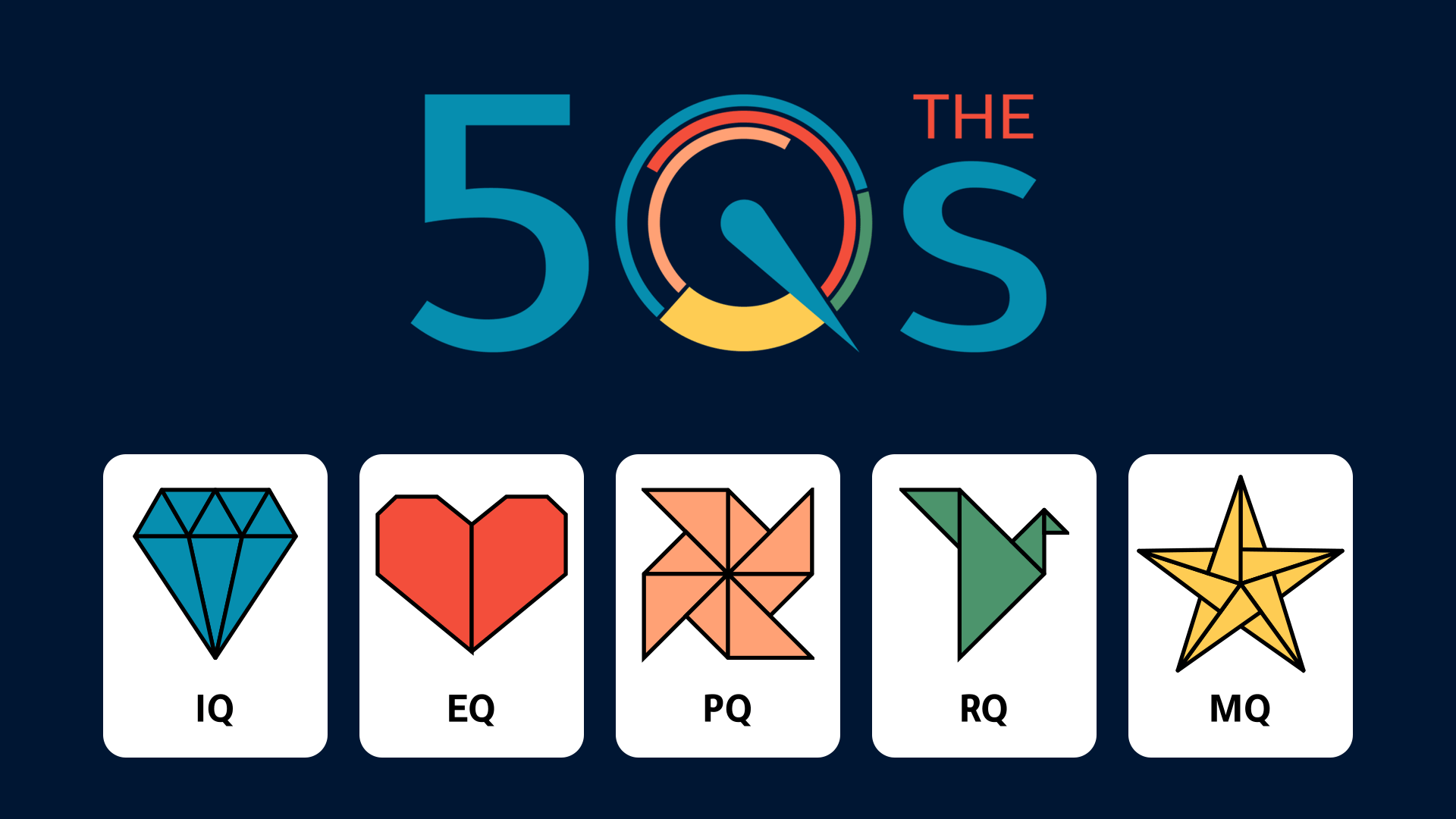
The five intelligences can be understood as five personas: the Analyst, the Empath, the Strategist, the Operator, and the Compass. Together they form a balanced leadership resource capable of handling diverse scenarios.
1. IQ — Cognitive Intelligence (The Analyst)
IQ reflects strategic thinking and problem-solving ability. The Analyst gathers information, connects insights, and constructs compelling arguments that create competitive advantage. Without cognitive clarity, leadership lacks clarity.
2. EQ — Emotional Intelligence (The Empath)
EQ is self-awareness and relationship mastery. The Empath understands and manages their own emotions while navigating those of others. High EQ correlates strongly with leadership effectiveness, performance, and wellbeing. Without it, even the best strategies fail in execution.
3. PQ — Political Intelligence (The Strategist)
PQ extends beyond empathy into influence. The Strategist understands organisational dynamics, aligns stakeholders, and advances agendas through negotiation and persuasion. Where EQ builds trust, PQ mobilises it.
4. RQ — Resilience Intelligence (The Operator)
RQ is the capacity to sustain performance under pressure. The Operator not only bounces back from setbacks but bounces forward – adapting to permanent shifts as well as temporary shocks. In a volatile world, resilience is no longer ‘good to have’; it is foundational.
5. MQ — Moral Intelligence (The Compass)
MQ defines ethical boundaries and purpose-driven decision-making. The Compass guides leaders through complexity with integrity. Credibility – whether in political or corporate leadership – depends on moral clarity.
These intelligences operate at both conscious and unconscious levels. They reinforce one another. Leaders who know when to draw on analysis, empathy, influence, resilience or moral judgement are better equipped to make sound decisions and guide their teams effectively.
The power of the framework lies in balance. Over-reliance on one intelligence creates blind spots; integration creates strength. But balance here does not mean using the 5Q’s equally; rather it is about drawing on each Q in the right measure depending on the scenario and situation.
As Dr Jawad explains: “The five intelligences can be expressed through five complementary leadership personas: the Analyst, the Empath, the Strategist, the Operator, and the Compass. Each persona illuminates a different facet of leadership: data and logic, stakeholder sentiment, political alignment, pressure endurance, and governance and ethics – providing a balanced resource equipped to handle different scenarios and situations.”
Dr Jawad has deployed the 5Qs Framework to successfully design and lead transformative leadership interventions strengthening the capacity of ministers and CEOs in Oman, while nurturing the next generation of youth leaders to thrive in the digital economy with purpose and impact.
The 5Qs Framework has been recognised internationally as a distinctive contribution to leadership development. Daniel L. Shapiro, founder and director of the Harvard International Negotiation Program, describes it as: “An extraordinary contribution to leadership, powerful because it is grounded not only in theory but in lived experience at the highest levels of government and business.”
Self-Knowledge Is Key
The framework is not just conceptual. As part of their research, Dr Jawad and Professor Kakabadse developed the 5Qs Pulse – a questionnaire-based self-awareness tool that helps leaders assess their relative strengths and development areas across the five intelligences.
Designed to complement rather than compete with other leadership or psychometric instruments, the 5Qs Pulse highlights natural tendencies and growth opportunities. It takes approximately 10 minutes to complete and generates a concise, confidential report, explaining each intelligence and highlighting your highest and lowest 5Q scores.
In today’s volatile political, social and economic environment, leaders across sectors need practical tools as much as theory. The 5Qs provide building blocks for sustainable, principled and effective leadership, and can be aggregated into multi-layered insights at teams, institutions, and wider systems levels.
As Stephen M. R. Covey, New York Times and #1 Wall Street Journal bestselling author of Trust & Inspire, observes: “The 5Qs Framework is a compelling, research-backed approach. It is deeply insightful and immensely practical for today’s complex world.”
Take the 5Qs Pulse
Are you leading with all five intelligences?
The 5Qs Pulse is:
- A leadership assessment tool offering a rounded view of your intelligence profile
- Built on more than a decade of research
- Grounded in data yet highly personal
- A benchmark against peers worldwide
Balanced leadership is not accidental. It is intentional.
For a limited period until 30 April, you can take the 5Qs Pulse – and discover where your leadership intelligence truly lies.
For more information about The5Qs, including options for teams and organisations, please visit this link: https://www.the5qs.com/home-5qs
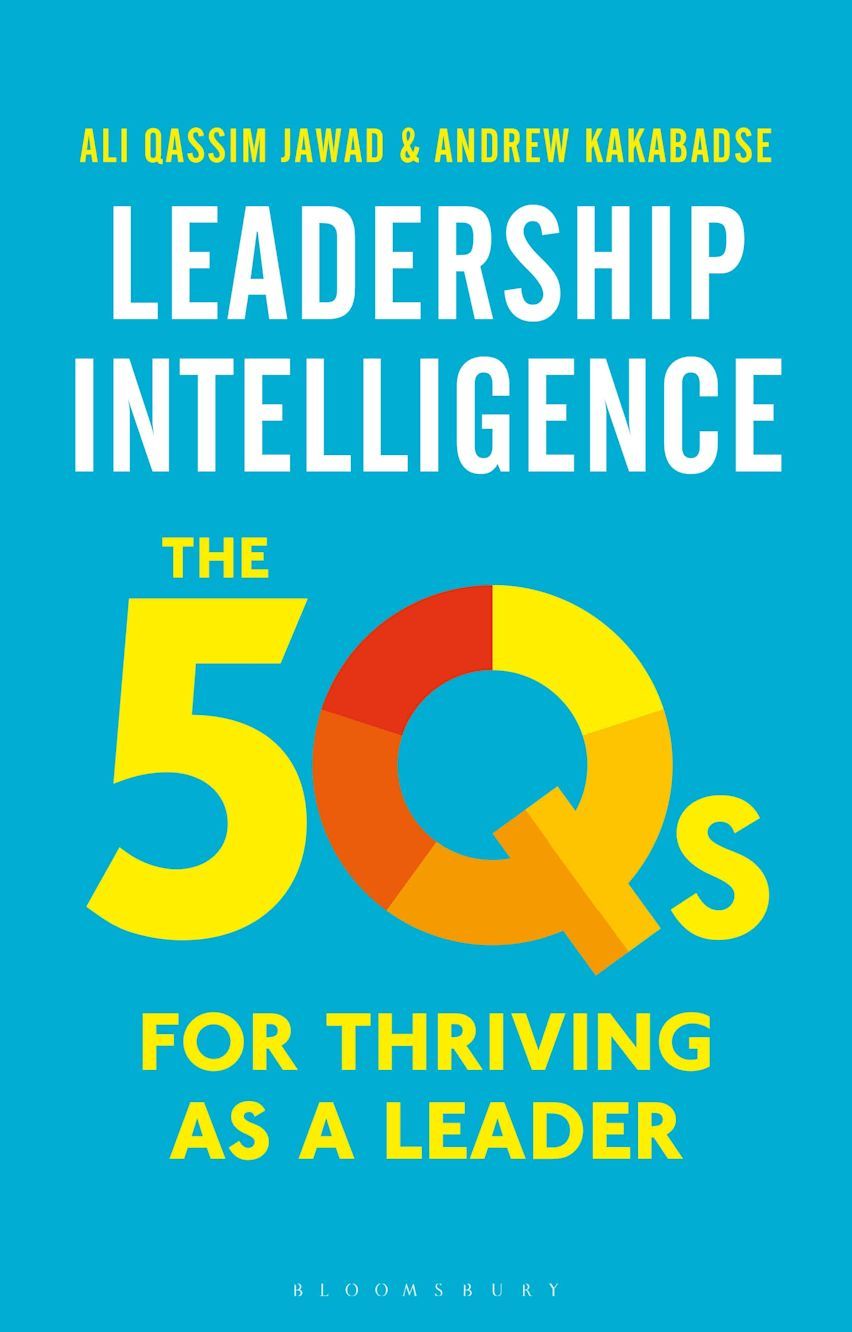
Leadership Intelligence: The 5Qs for Thriving as a Leader (Bloomsbury, 2019)

Des Dearlove is co-founder of Thinkers50. He is a former columnist to The Times, contributing editor to Strategy+Business, and co-editor of the bestselling Financial Times Handbook of Management. He has taught at some of the world’s leading business schools, including IE Business School and the Saïd Business School at Oxford University, where he is an associate fellow. He is also the author of the Archie Greene trilogy of children’s books under the pen name D. D. Everest.