Thinkers50 in collaboration with Deloitte presents:
What happens when the biggest risk to business isn’t in the model? Most financial models have a silent assumption buried at their core: that the climate will stay stable.
Spencer Glendon spent nearly two decades in investment research identifying what others missed. His search for hidden assumptions led him to discover that climate stability underpins virtually every business model, yet most leaders still treat climate as a specialist issue rather than a core strategic concern.
In conversation with Des Dearlove and Steve Goldbach, Spencer explores:
As the founder of Probable Futures, Spencer translates complex climate models into accessible tools, helping leaders understand probable future, rather than distant challenges or apocalyptic scenarios.
This podcast is part of an ongoing series of interviews with executives. The executives’ participation in this podcast are solely for educational purposes based on their knowledge of the subject and the views expressed by them are solely their own. This podcast should not be deemed or construed to be for the purpose of soliciting business for any of the companies mentioned, nor does Deloitte advocate or endorse the services or products provided by these companies.
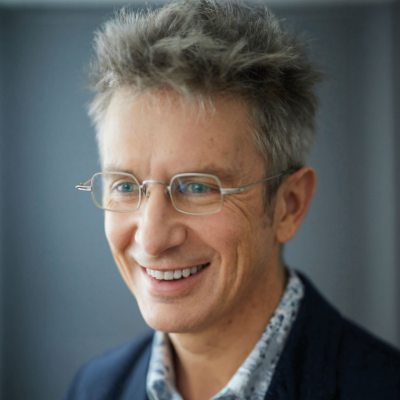
Founder, Probable Futures


US Sustainability Practice Leader, Deloitte








Inspired by the book Provoke: How Leaders Shape the Future by Overcoming Fatal Human Flaws; Wiley, 2021.
Des Dearlove:
Hello, and welcome to the Provocateurs podcast. Our aim with these podcasts is to provoke you to think and act differently through conversations with insightful leaders who offer new perspectives on traditional business thinking. I’m Des Dearlove, co-founder of Thinkers50, and this is a collaboration between Thinkers50 and Deloitte. My co-host today is Steve Goldbach. Steve leads Deloitte’s sustainability practice in the US. He’s also the author, along with Geoff Tuff, of three books, Detonate, Provoke, which, as you can imagine, inspired this podcast series, and now, the final book in the trilogy, Hone: How Purposeful Leaders Defy Drift. Steve, great to see you.
Steve Goldbach:
Great to see you, Des, and I’m extraordinarily excited for today’s guest. I’m going to tell you all about him, but I’m going to lead this off with… there are a very small number of people who have really influenced how I think about things over the years, and I count Spencer Glendon as one of those people. Spencer is the founder of Probable Futures. It’s a pioneering climate literacy initiative, democratizing climate science for global audiences.
He’s got a PhD in economics and 18 years as a partner and director of investment research at Wellington Management, where he oversaw over $1 trillion in assets. Spencer brings a unique financial lens to climate change. His revelation that climate stability underpins all of civilization sparked his own career pivot in 2017, which led to collaborations with institutions like the Woodwell Climate Research Center and Harvard Business School, where he now serves as an executive fellow, and that’s where I happen to get introduced to Spencer. He transforms complex climate models into accessible tools, helping individuals and organizations understand probable future rather than distant challenges or apocalypses. He lives in Boston with his wife, Lisa, and finds solace in cooking, storytelling, and exploring the natural world.
I first met Spencer when he was giving his presentation at a Deloitte executive education session at HBS, and I immediately stage-rushed after the session and said, “We need to talk.” Because what Spencer did for me was he put in a concrete lens to something that I had been mulling over a long time, which is why is it that we’re not seeing more financial implications from the risks that are posed from climate change. Spencer’s simplicity of saying, “It’s not in the model,” just sort of sparked a ton of thinking for me personally and has really changed how I’ve thought about the risk and value creation opportunities from addressing this.
Spencer, welcome, and thank you for your contributions to this space and the way you’ve changed my thinking. But let’s start with your background first. You started your career in finance. You’ve explained to me in the past that you’ve made a career out of figuring out what’s not in the model, almost like the folks from The Big Short, so I’d love you to tell your backstory and how you got to where you are before your pivot towards looking at climate change.
Spencer Glendon:
Sure. Thanks. Well, it’s great to be here. Des, nice to meet you. Steve, good to see you again.
Actually, I started my career in a factory. I was first an industrial engineer. I thought I would help fix Detroit one factory at a time. I grew up… I was born in the late ’60s, and I was born during riots. My mother, who was also born in Detroit, was born when Detroit was the fastest-growing, richest city in the world. And this juxtaposition of a place can be really prosperous and then have terrible outcomes not much longer thereafter really shaped my thinking about everything. I went to work as a quality control engineer and looked around, and there were so many bad decisions being made. They wanted to understand why, but they wanted to do that without interrogating how the process worked and also not talking to the workers. I left quite quickly and decided I’d figure out where things worked better.
What I did at the beginning of my career was go back and forth between places that worked well and worked poorly. I lived and did research in Germany. And then my first real full-time paying job was actually in finance, but in what would not be called high finance. I was a credit analyst at a small bank on the south side of Chicago in a Black neighborhood. I was one of the few white employees. I had sought out employment at this bank, called the South Shore Bank, because I was really interested in how did a bank function in a place where all the other banks had left, where all the other financial players had left. I just helped process loan applications from people who wanted muffler shops or used car dealerships or sandwich shops.
I got a good view of how financial systems try to project the future out. In some context, the future is just really, really hard to project. So one of the things we did almost without exception was wind up making franchise loans, not regular business loans that you would think of, but franchise loans because the franchise simplified the future. It made the future so much easier to foresee.
I was actually recruited from that job to a very different job, but with the same context, which was that I ran a small business lending program in Central Russia in the mid ’90s. In ’94, I moved to Russia, and I helped build a small business lending program in the city of Nizhni Novgorod, east of Moscow, and there it was: how do you get people to project onto financial statements what they’re going to do if they borrow $50,000 for their dentist office, or their brick-making facility, or their accounting firm? We had those kinds of applicants, but this idea of taking a very uncertain future and turning it into a formal spreadsheet was really sobering, really helped me understand that in some places the future is so uncertain that you need to understand much more profoundly, but you need to much more be a generalist looking around at different aspects of society.
Several years later, I was hired at Wellington to be an analyst, to look out for investment opportunities, and this was among people who really were quite comfortable. It was a really comfortable office, nice high floor, big building, great furniture. There just wasn’t a lot of risk around. It seemed like this is a pretty safe place to work, and people started arguing over decimal points. You take these projections out and it just looked like… How could things go wrong? Interest rates were falling every year. What I realized was I was in an environment where the future just seemed something you could be so confident about that risk really wasn’t a concern. People didn’t think that much about risk. Risk was actually, in most cases, just correlation risk of some kind.
I remember a new guy started and he had a new model for upside and downside, and all the downsides were just no growth. There was… nothing really bad happened, and I thought, “This is bizarre. I’ve been around these places where terrible things happen, and now I’m in a group of people who think not making more money next year would be terrible.” I realized this is a cultural group, and it’s not their fault, but everything worked out for them.
This is the early 2000s. I didn’t work with anybody who’d served in a war, I didn’t work with anybody who’d been in a place that had become very violent, I didn’t work with anybody who’d had real chaos around them, and so this lack of imagination was a big problem. But for me, it was helpful because I had said, “Well, I bet I can find some things nobody’s thinking about. I bet I can find some way to be additive,” and so I wound up being a good critic of other people’s models, looking around and saying, “Steve and Des, I’ve looked at your models or the way you invest. I don’t think you’re thinking about this or this.” I became director of macro research and then director of investment research, mostly because I was good at asking questions about what people left out, and that wound up being my career for quite a long time. I spent essentially almost 20 years understanding how other people saw the world and looking for things that they didn’t see, mostly because, to them, the world just seemed so stable, so predictable, kind of boring.
Steve Goldbach:
Can you just share some of the other things that you discovered that weren’t in the model? I remember you’re telling me a story about the Chinese demand for US bonds that had a significant… What were some of the other, it’s not in the models, that you discovered that allowed you to now have the financial flexibility that you have to effectively be giving so much of your own personal fortune back to this issue?
Spencer Glendon:
Sure. I took a job in finance actually because I was frustrated with the inability of academia to engage with the future. Academia is entirely backward-looking. In that, I think it’s worth noting, is a presumption that the past will in some way repeat, that the past is a model for the future. In fact, if you look at how empirical academic work is written, it takes the past in some way, some data set, but it’s written in the present tense that, instead of saying, “We found that in 1994 in New Jersey, this happened. People responded to unemployment benefits in this way.” It’s instead written, “We find that in response to changes and unemployment benefits, people do this, this,” not, “People did in New Jersey at this time this.” There’s this way that academia takes the past and projects it forward.
I didn’t see a lot of answers in the past for the things I was interested in, so going into finance was interesting to me because it was all forward-looking. What I discovered is that some parts of the future finance is unprepared for. I was actually hired after the Asian financial crisis by Wellington because the firm had done pretty poorly in understanding Asia, and they were looking for somebody a little bit different to maybe help them figure out what to do. I had, by this time, lived in Russia and Germany and done some other weird things and I spoke Chinese and they’re like, “Maybe you.” So I went over to China, and what I discovered was this massive country changing in a way that just seemed overwhelming and nobody talked about at work. I asked, “Why is nobody interested in China?” “Well, no, there’s nothing to buy or sell. There are no stocks, there are no bonds. But also it’s a small country, it’s far away.”
I went to the oil analyst, and I said, “What role does China play in your figuring out oil price?” He said, “Well, nothing. I just look at US inventories. That’s the main thing because the US runs the global economy.” I did this funny thing where I looked at the forecasts by investment banks, whole bunch of investment banks, and they all showed China growing at 8% real and some currency appreciation and some inflation, and I said, “Well, that’s going to be a lot of compounding. That’s going to be a big country.”
So I did a little survey. I reached out to the Asia Ex-Japan or the Asia lead person at all these banks and I said, “Can you tell me when Japan and China will cross in GDP? When will China be bigger than Japan?” They were all like, “I don’t know, 25 or 30 years.” I said, “Okay. How fast is Japan growing?” They’re like, “Oh, Japan’s not growing.” “How fast is China growing?” “Well, China’s growing like 8% real.” “All right, that’s pretty fast.” “What about currency appreciation and inflation like?” “Yeah, some of that, some of that.” I said, “Well, if I use your numbers, then it seems to me that China, which is currently a trillion, and Japan, which is four trillion, will be bigger than Japan in about 10 years,” and they’re like, “That’s never going to happen. I don’t know what we’re arguing about.” “You’ve given me two answers. One is that China will be a really big deal in 30 years. The other is that China will be bigger than Japan in 10 years.” They’re the same… couldn’t believe it.
I didn’t even have to have an out-of-consensus view about Chinese growth to have the view that we’re going to add $3 trillion of world GDP to a growing country, and what that meant was that commodity prices would change, that labor prices would change, that currencies would change, and this turned out to be a pretty easy forecast if you had that mindset. When I went to the oil analyst and said, “I think oil’s going to 100 bucks,” he was like, “That’s never going to happen.” It was striking to me that it could just be sort of out of the model, as you say, Steve. It will just be… This is not a relevant input. We do not put China in the model. And if we do, we treat it as marginal. The idea that things that are marginal can become inframarginal, the things that were seen as some little sleepy domain can become central, we had precedent for.
I then spent the next 10 years as an analyst finding more of those things, finding things that were assumed to be outside, didn’t have a price, but could be a big deal. It turns out that if you find one or two of those a year, you can do real well. You can come up with quite a lot of out-of-the box ideas that are investible.
Steve Goldbach:
And Spencer, what you’re describing is literally what we wrote about in Provoke, which is finding the “if” before it becomes a “when,” right; if it comes to fruition versus when it’s coming to fruition. Your China example was a perfect example of “this is about when, not if,” and the world just hadn’t recognized that it had gone through that phase change where this is just a matter of when it comes to fruition. If we look at the world in AI, the when moment for everyone was 2022, but we were talking about machine learning and AI for a long time beforehand, so this wasn’t exactly a new… It was just when it sort of came onto the public sphere and everybody realized it, which is what I’ve always sort of realized about the world of finance, which is, it doesn’t really matter whether your model is correct or not, it matters whether everyone recognizes it in terms of how it affects pricing of assets in the world.
Spencer Glendon:
Yeah. I’ll give another example, which is some work that I did around the same time as my early climate work, which is that there was lots of talk about big data among people in technology. There’d be all this conversation about, “Should you buy this company or this company that was an obscure tech company with a weird name that maybe was going to make some piece of the technology?” And it occurred to me that if it’s a big deal, then what happens, actually, is big companies will do better because big companies have giant data sets.
I came away from a trip to Silicon Valley with a bunch of tech people with just one observation, which was really large cap companies have a huge new advantage, which is their massive stores of data will become legible to them in a way that they weren’t legible before. That’s a pretty boring insight that the big insurance company or the big bank will get better, but that’s what this stuff is, is it makes this stuff legible. And the other insight that came from that is we will get new conglomerates. We will get new tech conglomerates. Because if this data is useful for something, it’s better to be a conglomerate and be able to apply it elsewhere.
Among my investment recommendations were things that I did not foresee when I started this research. It was like, “Oh, I guess this is an insight that large companies will do better and that actually we’ll have conglomerates again in a way we didn’t have them for a long time.” For a long time, the business sense was you need to focus. But if you can manage data and actually receive insight from it across many domains, then having lots of domains will be useful. Those kinds of insights… In that case, what the tech people told me at the time was, “You’re the only person who can explain to the insurance people that they should pay attention.” Because when the tech people show up to the insurance people, the insurance people are like, “I don’t know what you’re talking about,” but I could show up and tell them a story or put it in terms that were useful to them. Being a bridge between one domain expertise and another application was something that I worked a lot on, and that’s a lot of what my work is now.
In terms of my revelation that climate change was a big deal, I realized there was a domain of science that had a lot of insight that people were not internalizing, but also that they thought was the domain of somebody else. I was like, “No, no, no, this is in your domain. This is actually something you need to know.” What’s actually interesting about climate, and the reason I work on it the way I do and encourage other people too, is that it’s comprehensible. These AI models will remain a black box to effectively everybody, maybe even the people who make them. But talking about rainfall and humidity and heat and how these Earth systems work, anybody can do that. So part of my pitch was, “A, this is in your domain, and B, you can actually understand it,” and that is a powerful thing to communicate. That’s why I got so interested in bringing people together to teach them this stuff, first in finance, and then more broadly.
Des Dearlove:
As you say, you spent 18 years analyzing macro risks in the industry, but… We’ve always been told how the financial markets and institutions are becoming more and more sophisticated, but why did the markets take – well, I think you’ve partly answered the question, partly to do with this insulation factor that you were describing – they’ve clearly taken a long time to price in, sort of, climate change and energy transition risk. Would you even say that we’re at the point now where they’re priced into the markets?
Spencer Glendon:
No, there is a particular thing. I was interested in the fact that in finance, there is no topic you can’t talk about because there might be an angle. Everybody’s interested in some kind of angle. So if you’ve got a little bit of information about something, it might be valuable. All kinds of information are fair game, essentially. But I realized over time that almost all kinds of information can be put into some kind of box, and so you’d say, “Oh, here’s a piece of information that’s going to be relative for Des,” or, “This piece of information can be relevant for Steve,” but there are some kinds of information that don’t have a home.
What I realized… I started working on climate change a little more than 10 years ago because nobody worked on it. It was not assigned to anybody. I don’t know whether this is true of Deloitte. But a lot of Deloitte’s competitors and the investment banks, they do something that I used sometimes as a spur for research, which was these institutions would produce a study about something, big data or the future of something once a year, and you could tell six people had worked for six weeks on something, they’d published it, and then they’d all gone back to their day jobs. That thing never actually became anybody’s job. I would collect these sort of annual… The Economist would do something about some topic and then just stop talking about it for another 11 months. So those kinds of things would often sit around like, “I don’t know. It seems like machine learning might be important, but nobody seems to talk about it. It doesn’t seem to make a difference, or it seems like…” So climate change was that way.
But the reason I came to understand that it wasn’t a sign was twofold. One was there wasn’t a price, but the other was that climate was so stable previously. The moment that really changed for me in my professional and personal life was trying to figure out whether climate models were good models, surrounded by models of all kinds, cashflow models, investment models, people putting together models that would give a signal about whether to buy or sell. Most of those models are pretty bad. If they’re right 60% of the time and they’re random the other 40, that’s a great model. So I started reading old climate science journals, and I was like, “Oh, my god. These people have been right for 40 years for the right reasons in the right way at the right scale. I think this is mankind’s first good forecast, and nobody’s using it. It is not part of the conversation. How can that be? How can we not be using it?”
Well, it turned out though that the climate hadn’t changed for basically 12,000 years. The average temperature of the atmosphere was stable for 12,000 years with very little volatility. And if there’s one thing nobody works on in finance, it’s something that doesn’t change. If it doesn’t change and you assume it’s never going to change, you don’t assign anybody to it. It’s just set. What I realized was this is probably the deepest assumption in everybody’s model, which is that the climate is stable. That idea that this thing was so stable, it hadn’t changed in thousands of years, was embodied in all kinds of behaviors, and so imagining it changing was really hard.
Steve made a comment about apocalypse. What was easier for people to imagine was not that Boston, where I live, would get really swampy, so swampy and hot in the summer that every building would need a new HVAC system, or that New England would become a center for wildfire because periods of rain and dryness would work such that you would have real wildfire risk here. It was just easier to imagine apocalypse. People could talk about Mad Max, but they couldn’t talk about, “Well, what if all the plants that live in Massachusetts are just in the wrong place, and we need all different plants here?” That kind of specificity, there was no imagination for.
It was easier to imagine apocalypse, and so what I realized was there’s a real shortcoming both of imagination but also of a process for getting this awareness into everybody’s work. I make this comparison… I happen to work throughout the IT boom in this way, or the spread of the internet was, at the beginning, most people didn’t think the internet was their problem. You put that over to the webmaster. The idea that everything became an information business took a long time for most people to realize, and it’s really that kind of a process that we’re going through. My realization that nobody thought this was their job, they couldn’t imagine how it would change, and it was the most fundamental assumption in every model made me think, “Oh, boy, this is going to take a long time to reprice.”
So what happened was very interesting, and I’ll end here, which is that, once climate change became a thing at all, people were like, “Well, that must be a new domain, so we got to stick that somewhere. We stick it in the new stuff. We’ll create a sustainability department, and we’ll create venture for climate.” Venture is where you put new things, so all of a sudden you had climate venture and you had sustainability departments, and everybody else in the institution wasn’t their problem. It was somewhere else. It was put into a box.
Des Dearlove:
So if we can… Your organization, Probable Futures, makes climate data more concrete. As you say, it helps somebody in one domain understand what perhaps is going on in another domain. It makes it real. It cuts through the layer of insulation. I guess narrative’s important to that. Stories are important to that. How do you do that bridging? If we can then pull back a little bit, what are the learning points for leaders in general? You happen to be kind of bridging and spanning the financial world and the climate change world, if you like, but these things apply all over the shop for leaders. How do you do that? How do you make these stories specific so that people can comprehend that they will affect them?
Spencer Glendon:
Yeah. The three words we use to describe this work if we do it well are it’s vivid. It’s not an abstraction. The other is it’s resonant. It makes sense to you. It relates to something you care about. And the other is it’s useful. You can do something with it. So if we can make climate vivid, resonant, and useful, then it can be very powerful to people. I actually left Wellington and left tradable finance, tradable finance in particular, because actually it’s very hard to do that. It is all abstractions all the way down. The standard office building for an investment firm might as well be a spaceship. It’s just screens and views out over some abstract landscape. But if you can go to people who have some physical domain that they are part of, that they can see, that they care about, then you can say, “Well, let’s talk about what it is in this context that is vulnerable.” You can do that with anybody.
I bring the credibility of finance and the language of finance, but mostly what I bring it to is not to finance, but to people who are decision makers in all kinds of other domains. We tell a variety of stories to get started, and then people elaborate from there with their own stories. “Oh, that’s like this.” A story we often tell is a story about olives. Olives are the first orchard, first crop ever planted as an orchard as far as we can tell, and I ask people, “Would you plant an orchard today anywhere in the world?” Because for an orchard, while you’re planting a fruit or nut tree, they’re pretty fickle, they better have the right climate conditions for them, and then you better be really sure it’s the same climate for a long time in the future because it’s a terrible business, no yield financially for 10 years and the real value comes after 20 years. So you better be pretty confident that that climate’s really, really stable.
When I say that to people, they’re like, “Huh, I guess I never really thought about exactly how stable I assumed it was,” because this isn’t about… It was vaguely stable. It was literally the same ranges. Now, there were colder years and warmer years, but that range stayed the same for so long that people just assumed it was an enduring property. You say, “All right. Tell me something in the physical world that you care about, go into anybody’s office building, at what temperature outdoors do you think this office building will stop functioning well?” That is not a question most people have thought about, but it’s not a hard question to think about. I’ve been in London office buildings where it was 95 degrees Fahrenheit or 35C outside and the front doors were open because it was hotter inside, because the air conditioning was overwhelmed. It was not prepared for that range.
The idea that you’re out of range becomes disorienting to people because they had not thought about the building as being a deliverer of climate services under a set of specific circumstances. And then you say, “Look, every single thing around you, your house, your food, all assumes stability. So, now, tell me something you care about. Let’s talk through whether maybe it’s going to be out of range too and, when it’s out of range, what happens?” This is easier with people who are not dealing in very short-term transactions and it’s easier with people who are not entirely in abstractions, and those people actually have huge voices in the modern world now. AI and the rest is all abstractions, and the news cycle and media is all very short term, so it’s actually hard to… You have this headwind of people thinking today or the next hour is germane, and abstractions are where we live. But if you can ground people in the physical world, you start to see things coherently.
What’s been revealed over time to me is people say, “Well, that must be a big problem for the insurance companies,” and this is where it’s really helpful to know a fair amount about finance. You say, “Oh, no. It’s not a problem for the insurance companies.” The insurance companies are the only ones who understand this. They are in the risk business. You who are relying on insurance have made a very large assumption. If you look at a bank that’s lending money for a mortgage, they’ve made a 30-year commitment and they say, “Yeah, but the insurer’s on the hook.” “Oh, but the insurer only wrote a one-year policy. Insurer can back out any year.” And the borrower, well, they have a longer term commitment even than that. They have an open-ended commitment.
So, very early in this process, I reached out to someone at one of the big European reinsurance companies. I said, “So, tell me how you’re thinking about this,” and they said, “Oh, there’s a very simple rubric for this, which is, the first time there’s a flood or a hurricane, it’s a problem for the insurers. The insurers have to pay. The second time, maybe it’s a problem for the insurers. But the third time and from then on, it’s a problem for the equity and debt holders,” because the insurers are out. The real question is, “Does anybody want to live there or do they want to build something there? Do they want to own something there?” What he then explained was, “You have a $5 million building or $100 million building or a $200 million building and you think, ‘Wow, I’m going to get $200 million worth of insurance for my $200 million building.'” He said, “There’s no insurance for the land value. The insurance is just to replace the windows. The real value is the place, and nobody insures the place.”
Those kinds of insights like, “Oh, I can’t buy insurance for my location,” is the kind of awareness that people say, “Oh, I had a limited model. My model was too small. My model was actually quite… There were big assumptions in my model.” It’s finding for different audiences the way in to them starting to think about their own challenges, their own issues. As Steve said, we teach at Harvard and some other places, and we just ask the audience, “Hey, has climate affected you?” And then the audience immediately erupts with, “Yeah, yeah.” In the session that Steve was in, one of his colleagues said, “In Hokkaido, in Japan, we need air conditioning now. That’s never happened before.” Now, does that translate into a strategy for a company? Not really, but it socializes this idea of like, “Oh, this is different, and we might need a new model.”
Steve Goldbach:
And Spencer, what I particularly appreciate about the way you’re going about this is this is not a religious argument in some way. This is just very pragmatic. It’s like, “What do we take for granted in the physical world?” The one that always resonated with me was just the grades of asphalt that are being used in different locations. It was resonating for me because I have a home on Cape Cod, and I had a tree down in a storm, and so I tried to take advantage and take the wood from the tree to use for summertime fire pits in my backyard. I created a little place to cure the wood on my driveway, covered it, and it turned out that my grade of asphalt for my driveway was insufficient, given 90 degree temperatures have historically been uncommon on the Cape, but now are relatively commonplace. The darn thing just melted my driveway into a few holes.
My new portfolio includes infrastructure, and, to some extent, climate and infrastructure are both things that we historically set and forget and just assume that they will be there. You’re basically just saying like, “Look, I’m not talking about policy. I’m not talking about what we do. I’m just saying we need to understand that we have these risks in how our societies have been constructed, that we are walking towards a place where we’ve assumed that the range will be narrow, and the range is actually quite a bit wider, and we need to take advantage of it.” You’ve told me a story about the specifications for a hospital you’re working with. I think it would be interesting to share how they’re thinking about it as well.
Spencer Glendon:
Sure. Yeah. First, just to say, the way I frame it is I don’t really care what you value, but I’m really confident that whatever you value is based on a stable climate. The evolution of it, its validity, its stability, its strength is based on a stable climate. I happen to have grown up playing hockey outside. Nobody plays hockey outside where I grew up anymore because winter’s too unreliable, and there are things like that that are mundane, that are prosaic.
Let’s take the example of the hospital. I live in Boston. There are many famous large hospitals here, and they’re thinking about how to attract people from around the world. They want to serve people from around the world, so they need to think about how prepared they are for the future. They’ve reached out to people, including myself, for guidance. This is a good place to note that global warming, the best way to understand it is not in temperature terms, but the temperature is just a measure of energy. The system just has more energy. What’s happened is greenhouse gases have trapped energy, and now we just got more energy bouncing around, doing stuff around the surface of the Earth. Well, a more energetic system can exist in more states, more things can happen, more things are possible.
You look back to the early part of the 20th century, there just weren’t that many big hurricanes because the system had a lot less energy. As the system’s gotten bigger, gotten more energetic, the possibility of much larger hurricanes has gone up, and the possibility of hurricanes much further north has gone up because warm water now exists further north in the Atlantic and further north in the Pacific. Both on the coast of Japan and the eastern coast of the United States, big hurricanes can happen further north because the water’s warm enough to generate this kind of a storm.
So if you’re a big hospital in Boston and you want to be ready, you ask, “Well, okay, we’re at one and a half now. If we get a little bit warmer over time, how big a hurricane should I be ready for?” And the answer is, “If you really want to be prepared for the one in a hundred a year storm, you should be prepared for 205 mile an hour winds,” and those 205 mile an hour winds are going to have projectiles in them. If you want your glass tower to be safe, you should buy glass that will not explode when hit by a projectile at 205 miles an hour, and so that’s what they’ve done.
That idea that that’s an engineering problem as a form of adaptation is a good way to illustrate that there are things we can do, there are good questions to ask, there are kinds of investments they can make. So if you take that hospital, that building, I think the number is like it’s 5% more expensive, the building is, because they got ready for the kinds of climate change that are likely, but it is more expensive, but it’s a cost that is avoiding a future loss.
Now, if you think about that hospital, what are they planning for? Well, they want to be able to keep operating under those extreme circumstances. But they also understand that under those extreme circumstances, other people are going to be a mess, and so people are actually going to come to the hospital. The hospital’s actually going to be… By being resilient, the dynamics of who comes to the hospital are likely to change. What’s actually come out of that same project is an investment by that hospital and by a number of other regional businesses in the downtown Boston area to actually create a pool of money to create a more resilient neighborhood system because what you don’t want is there just to be a few buildings that still have the lights on and everybody else is in trouble.
I had a conversation with a Nigerian oil company recently about that very thing. They said, “The rains are getting so intense that the nearby communities are washed out, and so they come to the oil processing facility because our facilities are built with high engineering standards.” That company is now going out into neighborhoods and improving the infrastructure, not because their employees live there, but because they see that the risks for the people around them are changing and they don’t want to have this chaotic environment when heavy rains come.
Des Dearlove:
You’ve mentioned the word adaptability, and it seems to me that that’s at the core of what you’re saying. There’s people out there saying, “We need to stop the climate change. We need to push a button, and it all stops. It goes back into its box.” I don’t think you’re saying that. I think you’re saying what we have to do. That’s the name of your organization, Probable Futures. There are lots of possible futures. One would like to think that one sort of genius of our species is our adaptability, and yet we don’t seem to be approaching change with that in mind. It seems to me that’s part of what your message is.
Spencer Glendon:
Yeah, correct. That’s exactly right. It is a genius of our species. Actually, the thing that I’ve come to understand better over time is that our species has a… That genius can be employed well or poorly. We are adapting. We’re actually adapting very quickly. We’re adapting to the idea that the weather’s worse, and that is a very strange form of adaptation is just accepting: “Well, I guess LA burns some of the time, and I guess our kids are going to live in a lousy place, and I guess that’s just the way it is. I’ll just adapt my expectations to that.” I would say that’s a poor form of adaptation. In fact, we talk to both children and adults, and the children say, “It seems like the parents know, the adults know, the future’s going to be bad and aren’t really doing anything about it.” It’s very interesting when I talk to leaders how much they talk, not about their businesses, but about their family homes and their children.
One of the things that I think is very helpful about this work is it anchors you back in place, and I think that’s one of the big risks of modern business is that it is placeless. This happens to actually be what my dissertation was about. Rich people are mobile in America. Poor people are immobile. When I present to a garden club or to a town, they ask, “What are we going to do?” Generally, when I present to rich people, they’re like, “Where can I go?” And this idea that we need to be rooted in place, that civilization is rooted in place, gets you to adaptation, gets you to say, “All right, what are we going to do? Because the climate has already changed quite a bit, and it’s going to change further.”
The other reason to talk about adaptation in this way is that it motivates decarbonization in a different way than it did before. I think decarbonization was presented as a solution to a problem people couldn’t really imagine, and so it was often framed as moral and not as a conscious choice between two worlds. The two worlds that we’re offered were the solution where it all goes away and the apocalypse where it dominates everything. We call this probable futures because we’re actually already in a world where we’re not going to solve it and go back. We’re always going to live in some relationship with climate change. Let’s think about that range and choose, have agency, “Which part of this do we want to live in?” How warm a world do you want to live in is a question that’s very different than, “Do you want to solve climate change?”
One of the ways we put this is we want to manage the situations, the climates we can’t avoid, and we want to avoid the climates that are probably unmanageable. That idea of making it clear like, “Hey, this is probably a really unstable world. At 3 degrees C, basically all of the trees are in the wrong place and almost everybody who lives near the equator is exposed to temperatures higher than the human body can tolerate,” that’s probably not a stable world. That’s probably not a world where you have a narrow specialty and you don’t think about the climate. Hopefully, what we do is get people to engage and make decisions that make their communities more stable or institutions more stable and, in the process, motivate in a different way, not a better or worse way, but a different way, engagement with a broader sustainability initiative.
Des Dearlove:
Steve, I’m going to leave you to the last question. I think we’re running out of time.
Steve Goldbach:
Well, Spencer, yeah, the thing that I want to come back to with you on this is you once told me that because… We’ve been doing a lot of collaboration lately and it’s been brilliant, and you once told me that, “I don’t show up for sustainability conferences. I want to spend time talking to business leaders.” The thing that you’ve taught me is that this is the importance of, if you want to drive sustainability, it’s about getting it into the boardroom, into general management. Can you share a bit about that philosophy and how you arrived at that and your conclusions and your provocations for our audience?
Spencer Glendon:
Sure. It comes back to two things. One is, this is not a specialist domain. This is: everything rests on a stable climate. Humans were nomads for 190,000 years, and then they settled around 9,500 BCE, which happens to be right when the climate settled. It really doesn’t make sense to settle in place if the climate is changing. In fact, there’s early economic work that says, “Don’t worry about climate change. We can all go back to being nomads.” That’s a world of generalists, not a world of specialists, and I realized, “This is a general problem.” Where do general issues get processed? Where do general issues get discussed? They get discussed at the board. They get discussed at the C-suite level. That further down, everybody’s got a limited domain.
So what I would notice when I talked to people in my firm, in other firms, was they would say, “Yeah, somebody should work on that.” And then I’d go to the board, they’re like, “Man, I don’t want it.” They could tell. If it was a big deal, it was their big deal. Realizing that this needs to be at the board level, at the C-suite level, in order to be a cultural norm or standard became pretty obvious to me. The other part of that is that, I don’t think this is true of you, Steve, and I don’t know you, Des, but I’m going to guess, a lot of people do their job and they don’t think of that as a legacy, and so there’s this sense of being transient, being transactional, and they don’t want to think of themselves as transactional people, but this is a real legacy issue. Talking to people who lead organizations, who make decisions about long term of the firm really makes a difference, and that’s where this lies. Some of it lies in socializing it across the firm and making strategic choices.
One of the biggest banks in the world, when they came to us, sustainability all reported to the director of reputational risk. That’s where it sat. It was all reputation. Thankfully, now, it sits in the C-suite with the chief risk officer. Things like that send a signal to everybody, but also lead to process change. I think that we’ve seen that pretty consistently that, at mid-levels of organizations, people tell us to talk to somebody else. At the highest level of the organization, people are like, “Oh, I guess this is my job, and I need to figure out how to make it other people’s job.”
I’ll maybe end with the woman who was the head of a big school district in America. She’s like, “Once I understood this this way, I realized, actually, it was everybody’s job and it could be turned into people’s job, parts of people’s jobs.” She said, “I thought about it as existential until I realized it was a set of things about the physical world, and we could figure out when to have recess, what to serve for lunch, what to do with the parking lot for the facilities manager, the school lunch manager, the school nurse. These were things we could make practical throughout the organization that would make the kids way better off.”
I’ll give you a simple example. Kids don’t offload heat very well, so high temperature is much harder on kids’ bodies than on adults. After a hot night, kids are not very smart. Even the smartest kid is cranky and grumpy and not very smart because their body has suffered. They’ve not had a good night’s sleep there. Why is this relevant? Well, we take a lot of tests in America at the end of the school year and the beginning of the school year. And, increasingly, at the end of the school year and the beginning of the school year, it’s hot. It’s way hotter than it used to be. Should you take a standardized test on a really hot day after a really hot night? Are you really measuring that kid’s aptitude? That’s not inventing cold fusion. It’s adapting to climate change, but it’s also taking the physical world seriously in a way that can be a policy.
But until the head of the school district said, “This is the kind of thing we need to work on,” the organization didn’t embrace it. There are so many things like this. And if I can just put in one plug about why I still do this 10 years later, the world gets more interesting when you see it this way. There are all these things about the world that you’re like, “Wow, I never thought about asphalt before,” and now it’s like, “God, asphalt’s pretty cool. Pretty amazing that it has these specs.” And then wires, like, “Oh, man, power wires and power plants and trees, all these things that…” I was a big ideas guy. Now, all these small facets of the world are interesting to me, elicits wonder and we share it together, and so it’s contagious.
Des Dearlove:
And that’s the joy of moving from abstractions to physical reality, which is, again, one of the things you’ve been talking about.
Spencer Glendon:
It’s a real joy, yeah.
Des Dearlove:
Yeah. I think abstractions have become a bit of a problem all over the place.
Spencer, it’s been a real joy talking to you. Unfortunately, that’s all we have time for.
Spencer Glendon:
That’s enough.
Des Dearlove:
That’s good.
Huge thanks to our guests, Spencer Glendon, and to you all for listening. This is Provocateurs, and we’ve been Des Dearlove and Steve Goldbach. Please do join us again soon for another episode of Provocateurs. And if you’ve enjoyed this episode, please hit the like button and share with your friends and colleagues. Until next time.
This podcast is part of an ongoing series of interviews with executives. The executives’ participation in this podcast are solely for educational purposes based on their knowledge of the subject and the views expressed by them are solely their own. This podcast should not be deemed or construed to be for the purpose of soliciting business for any of the companies mentioned, nor does Deloitte advocate or endorse the services or products provided by these companies.

Thinkers50 Limited
The Studio
Highfield Lane
Wargrave RG10 8PZ
United Kingdom
Contact us at:
enquiries@thinkers50.com

Thinkers50 Limited
The Studio
Highfield Lane
Wargrave RG10 8PZ
United Kingdom
Contact us at:
enquiries@thinkers50.com

Thinkers50 Limited
The Studio
Highfield Lane
Wargrave RG10 8PZ
United Kingdom
Contact us at:
enquiries@thinkers50.com
| Cookie | Duration | Description |
|---|---|---|
| LANG | 9 hours | Linkedin set this cookie to set user's preferred language. |
| nsid | session | This cookie is set by the provider PayPal to enable the PayPal payment service in the website. |
| sp_landing | 1 day | The sp_landing is set by Spotify to implement audio content from Spotify on the website and also registers information on user interaction related to the audio content. |
| sp_t | 1 year | The sp_t cookie is set by Spotify to implement audio content from Spotify on the website and also registers information on user interaction related to the audio content. |
| tsrce | 3 days | PayPal sets this cookie to enable the PayPal payment service in the website. |
| x-pp-s | session | PayPal sets this cookie to process payments on the site. |
| __cf_bm | 30 minutes | This cookie, set by Cloudflare, is used to support Cloudflare Bot Management. |
| Cookie | Duration | Description |
|---|---|---|
| l7_az | 30 minutes | This cookie is necessary for the PayPal login-function on the website. |
| Cookie | Duration | Description |
|---|---|---|
| CONSENT | 2 years | YouTube sets this cookie via embedded youtube-videos and registers anonymous statistical data. |
| _ga | 2 years | The _ga cookie, installed by Google Analytics, calculates visitor, session and campaign data and also keeps track of site usage for the site's analytics report. The cookie stores information anonymously and assigns a randomly generated number to recognize unique visitors. |
| _gat_gtag_UA_10408481_1 | 1 minute | Set by Google to distinguish users. |
| _ga_ZP8HQ8RZXS | 2 years | This cookie is installed by Google Analytics. |
| _gid | 1 day | Installed by Google Analytics, _gid cookie stores information on how visitors use a website, while also creating an analytics report of the website's performance. Some of the data that are collected include the number of visitors, their source, and the pages they visit anonymously. |
| Cookie | Duration | Description |
|---|---|---|
| NID | 6 months | NID cookie, set by Google, is used for advertising purposes; to limit the number of times the user sees an ad, to mute unwanted ads, and to measure the effectiveness of ads. |
| test_cookie | 15 minutes | The test_cookie is set by doubleclick.net and is used to determine if the user's browser supports cookies. |
| VISITOR_INFO1_LIVE | 5 months 27 days | A cookie set by YouTube to measure bandwidth that determines whether the user gets the new or old player interface. |
| YSC | session | YSC cookie is set by Youtube and is used to track the views of embedded videos on Youtube pages. |
| yt-remote-connected-devices | never | YouTube sets this cookie to store the video preferences of the user using embedded YouTube video. |
| yt-remote-device-id | never | YouTube sets this cookie to store the video preferences of the user using embedded YouTube video. |
| yt.innertube::nextId | never | This cookie, set by YouTube, registers a unique ID to store data on what videos from YouTube the user has seen. |
| yt.innertube::requests | never | This cookie, set by YouTube, registers a unique ID to store data on what videos from YouTube the user has seen. |
| Cookie | Duration | Description |
|---|---|---|
| DEVICE_INFO | 5 months 27 days | No description |
| loglevel | never | No description available. |
| m | 2 years | No description available. |

Thinkers50 Limited has updated its Privacy Policy on 28 March 2024 with several amendments and additions to the previous version, to fully incorporate to the text information required by current applicable date protection regulation. Processing of the personal data of Thinkers50’s customers, potential customers and other stakeholders has not been changed essentially, but the texts have been clarified and amended to give more detailed information of the processing activities.